


The main Robot Framework alternatives are Playwright, Cypress, Katalon Studio, pytest, Selenium, Appium, Karate, TestComplete, Cucumber, and Jest with a browser tool. This guide compares them as of November 2026 and explains when moving to Browser library is enough.
The main Robot Framework alternatives are Playwright and Cypress for code-first web testing, pytest for Python teams, Appium for mobile, Karate and Cucumber for readable API and BDD tests, and Katalon Studio for low-code testing across web, mobile, API, and desktop, or TestComplete for Windows desktop-heavy UI testing. The right one depends on why you want to move, because Robot Framework itself is actively maintained and can already drive browsers through Playwright with its Browser library.
This guide covers what Robot Framework looks like today, when switching makes sense, and how 10 alternatives compare as of November 2026.
What Robot Framework looks like today
Robot Framework is an open-source, keyword-driven automation framework for test automation and robotic process automation (RPA). It is implemented in Python, supported by the non-profit Robot Framework Foundation, and currently on major version 7. Tests are written as readable keyword steps in .robot files, and Given/When/Then style is supported.
The core framework does not automate a browser, device, or API by itself. That comes from libraries, and the choice of library shapes what your tests can do:
- Browser library runs on Playwright, drives Chromium, Firefox, and WebKit, and waits automatically for elements before acting. It is the newer of the two main web libraries.
- SeleniumLibrary uses Selenium WebDriver. Many older Robot Framework suites are built on it, which is where the "Robot Framework sits on Selenium" idea comes from.
- AppiumLibrary adds iOS and Android testing through Appium.
- RequestsLibrary adds HTTP API testing, built on the Python requests library.
You can extend all of this with your own keywords written in Python, Java, or other languages. Parallel runs usually go through Pabot, a community tool.
So a fair comparison is less about "Robot Framework vs Selenium" and more about keyword DSL vs plain code, Python vs JavaScript or Java, and how much tooling your team wants to assemble.
When to stay on Robot Framework and when to switch
Not every frustration with Robot Framework needs a new tool.
Stay on Robot Framework if:
- Your suite runs on SeleniumLibrary and the pain is flaky waits or tab handling. Moving to Browser library gives you Playwright's auto-waiting and browser contexts without moving to a new language, though library keyword calls and locators still need updating.
- Testers and business analysts read or write the tests, and the keyword syntax is why they can.
- You also automate RPA tasks with the same framework and skills.
Consider switching if:
- Your developers own the tests and want to write them in TypeScript, JavaScript, or plain Python with normal IDE support.
- Keyword and resource files have grown hard to refactor, and you would rather use functions, classes, and fixtures.
- You want record and playback, an object repository, and web, mobile, API, and desktop testing in one installed tool instead of a set of libraries.
- You need a vendor-supported product with plans, support, and reporting built around it.
How to choose a Robot Framework alternative
Start from what your team writes and what it tests:
- Web testing, developer-owned: Playwright or Cypress. Both are code-first, run in CI, and have built-in debugging tools.
- Python teams: pytest, with Playwright for Python or Selenium for the browser layer.
- Mobile apps: Appium directly, or a tool that wraps it with a recorder, such as Katalon Studio.
- API-heavy suites: Karate for readable API tests, or pytest with an HTTP client.
- Mixed-skill QA teams that like keywords: Katalon Studio, TestComplete, or Cucumber, depending on whether you want low-code tooling or BDD specifications.
Robot Framework alternatives at a glance
The table compares Robot Framework and the 10 alternatives as of November 2026, using each project's or vendor's own site.
Tool | Type and license | Main languages | What it covers | Test style |
|---|---|---|---|---|
Robot Framework (baseline) | Open-source framework | Robot syntax, Python for libraries | Web, mobile, API, and RPA through libraries | Keyword-driven |
1. Playwright | Open-source library and test runner | TypeScript, JavaScript, Python, .NET, Java | Web on Chromium, Firefox, WebKit; API requests | Code |
2. Cypress | Open-source app; Cypress Cloud has free and paid plans | JavaScript, TypeScript | Web end-to-end and component tests | Code |
3. Katalon Studio | Commercial IDE with a Free plan | Built-in keywords, Groovy, Java | Web, mobile, API; Windows desktop on a paid plan | Record, keywords, or code |
4. pytest | Open-source framework | Python | Unit, API, and functional tests; browsers through plugins | Code |
5. Selenium | Open-source browser automation | Java, Python, JavaScript, C#, Ruby | Web on major browsers | Code |
6. Appium | Open-source mobile automation | JavaScript, Python, Java, Ruby, .NET clients | iOS, Android, and other platforms such as TV and desktop | Code |
7. Karate | Open-source core (MIT); paid tiers | Gherkin-style DSL, JavaScript | API, UI, performance tests, and mocks | DSL |
8. TestComplete | Commercial, Windows only | JavaScript, Python, VBScript | Desktop, web, mobile | Keywords or scripts |
9. Cucumber | Open-source BDD tool | Gherkin plus Java, JavaScript, and others | Whatever your step definitions automate | BDD scenarios |
10. Jest with Playwright or Cypress | Open-source combination | JavaScript, TypeScript | Unit and integration tests (Jest), browser tests (Playwright or Cypress) | Code |
1. Playwright
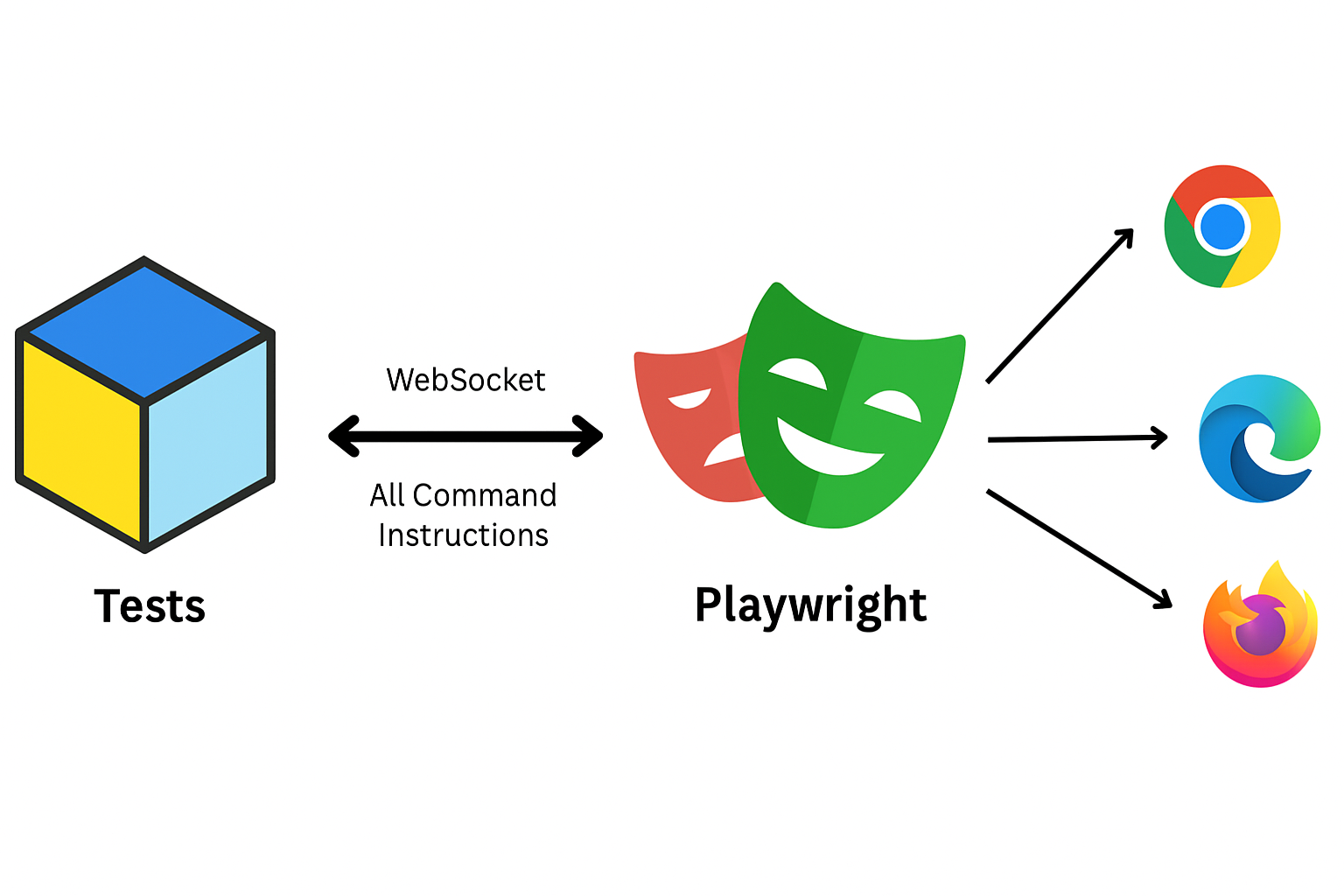
Playwright is Microsoft's open-source browser automation library and test runner. It drives Chromium, Firefox, and WebKit, and you can write tests in TypeScript, JavaScript, Python, .NET, or Java. It waits for elements automatically, treats tabs and pop-ups as separate pages, and isolates each test in its own browser context. Tooling includes codegen for recording tests, Trace Viewer for stepping through failed runs, and Playwright MCP and a CLI for coding agents.
Robot Framework vs Playwright: Browser library already runs on Playwright, so the browser engine is the same. The difference is how you write tests. In Robot Framework you write keywords; in Playwright you write code, with the test runner's built-in parallel workers, sharding, and fixtures. If your developers own the suite and work in TypeScript, Playwright removes a layer. If testers own it, Browser library keeps the keyword syntax with Playwright underneath.
For a closer look at how a code-first tool compares with a low-code IDE, see Katalon vs Playwright.
2. Cypress
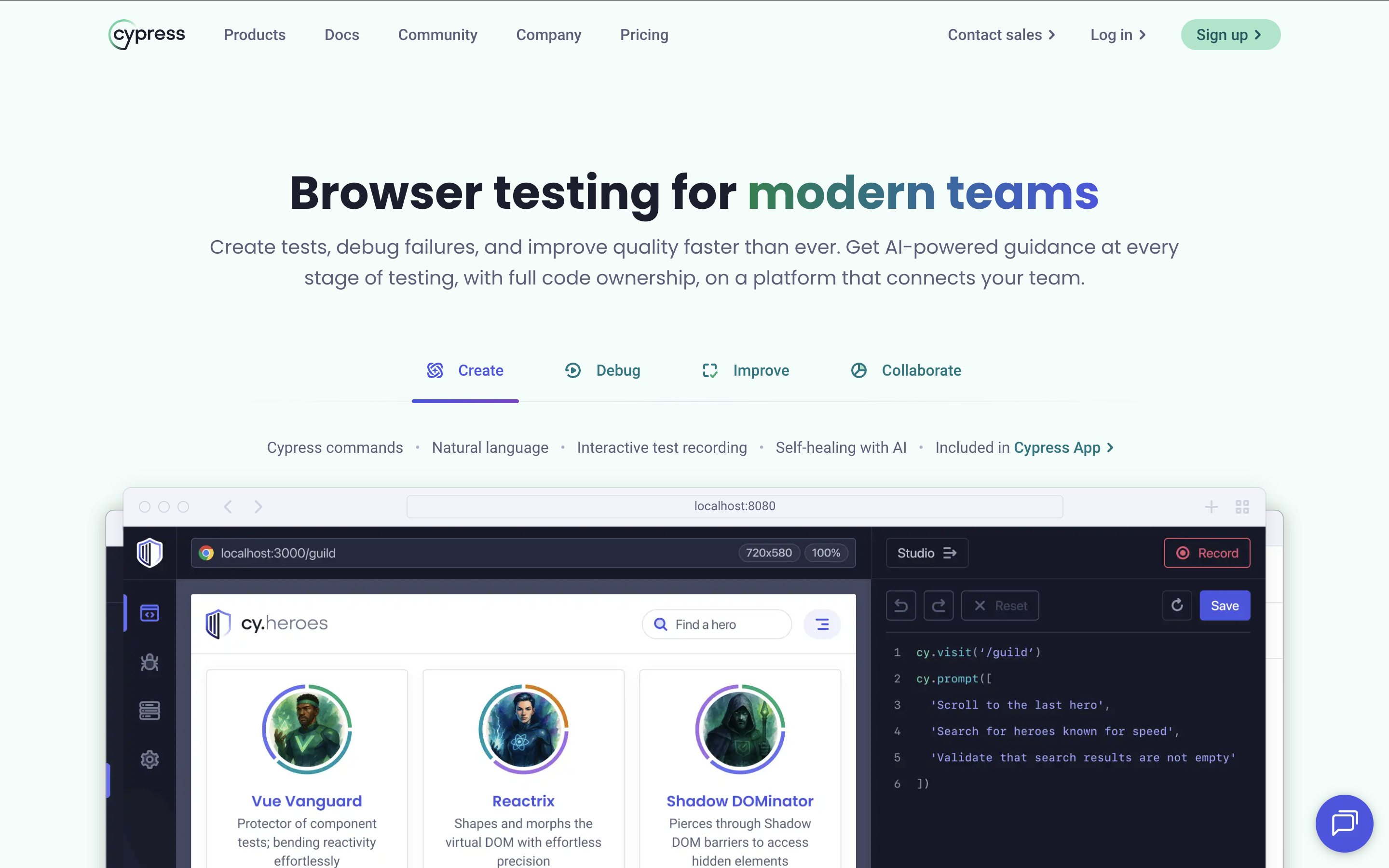
Cypress is a JavaScript end-to-end and component testing tool. The Cypress app is free and open source; Cypress Cloud, which adds recorded runs, Test Replay, analytics, and parallelization, has a free Starter plan and paid plans. Tests are JavaScript or TypeScript specs that run inside the browser alongside your app, which gives Cypress direct access to the DOM and network. Its features include time-travel debugging in the runner, cy.intercept for stubbing network requests, and AI features in beta as of November 2026, such as cy.prompt and AI in Cypress Studio, both of which need a Cypress Cloud account (the free plan works).
Robot Framework vs Cypress: Cypress suits frontend teams who already work in JavaScript and want tests in the same repository and language as the app. Robot Framework suits QA-led teams who prefer keyword steps and Python, and need mobile, API, or RPA in the same framework. Cypress focuses on web apps only, so mobile apps need a separate tool.
3. Katalon Studio
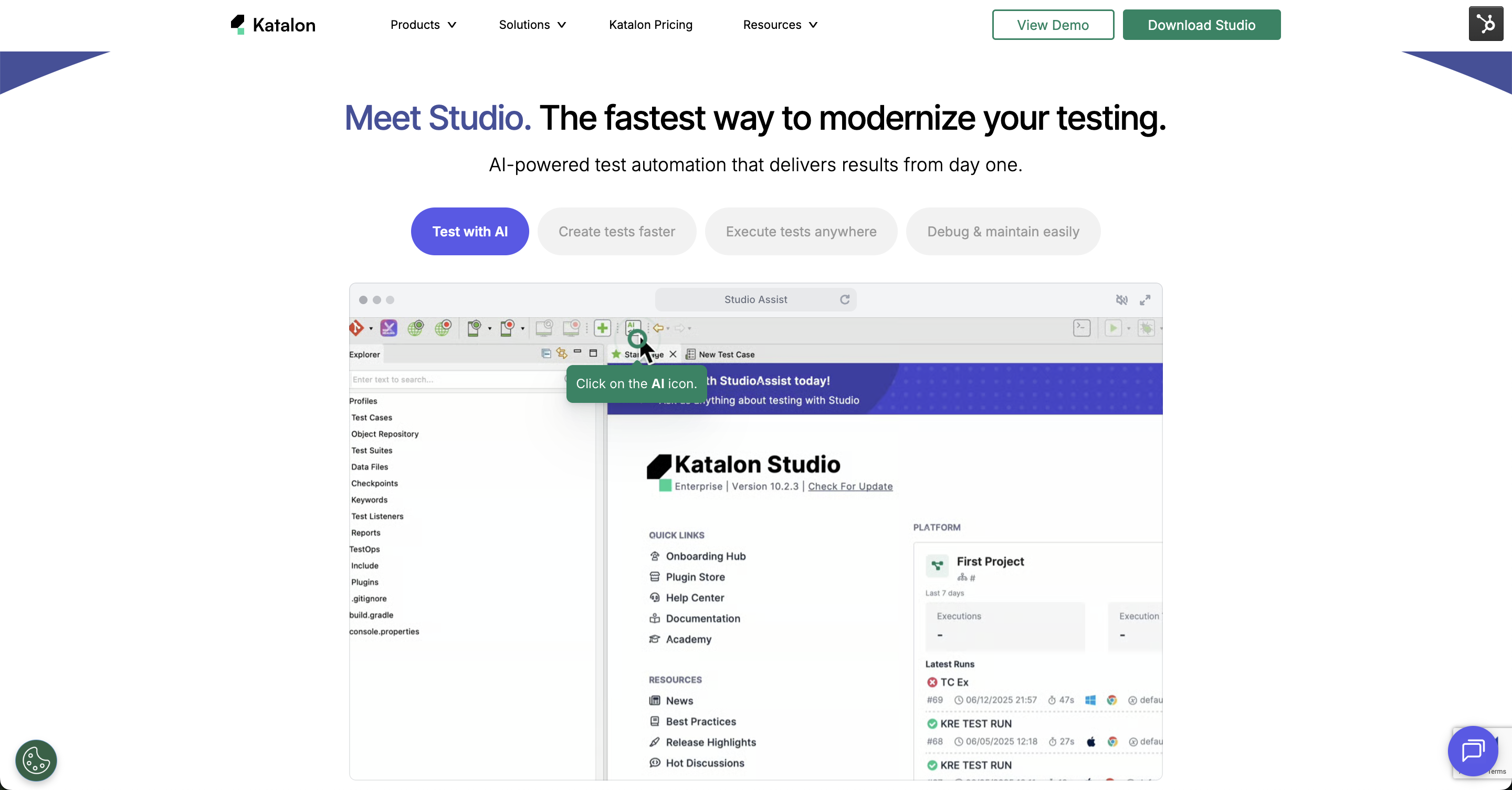
Katalon Studio is a test automation IDE for web, mobile, API, and Windows desktop testing, with API tests for REST, SOAP, and GraphQL. Like Robot Framework, it is keyword-driven at its core: you build test steps from built-in keywords, and you can switch the same test case to a script view and write Groovy or Java. You can also record tests, capture objects into a shared Object Repository, and write custom keywords in Groovy for your team to reuse.
How it compares with Robot Framework: both use keywords, but they package them differently. Robot Framework gives you a core framework and libraries you choose, install, and configure, which is flexible and free. Katalon Studio ships web, mobile, and API testing in one install, with a recorder and object spy, so less setup is needed but you work inside Katalon's tooling.
What each plan includes, per the Katalon pricing page as of November 2026:
- Free: basic record and playback for web and mobile, plus local authoring and local execution for web, mobile, and API tests.
- Professional: $1,800 per seat per year, billed annually (about $150 a month). Adds Windows desktop testing, AI self-healing, the Katalon AI Assistant, parallel execution, and BDD (Cucumber) testing.
- Enterprise: custom pricing, adding SSO, role-based access control, and private cloud or on-premises deployment.
There is a 30-day free trial. Running Studio tests from the command line or in CI needs the Katalon Runtime Engine (KRE) add-on and a paid plan (Professional or Enterprise). Running on cloud browsers and devices needs TestCloud, a paid add-on that works with any Studio plan, including Free.
Not ready to move everything? Katalon TestOps can collect results from Robot Framework runs. See Katalon and Robot Framework for how the two work together, including adding visual checks to existing suites.
4. pytest
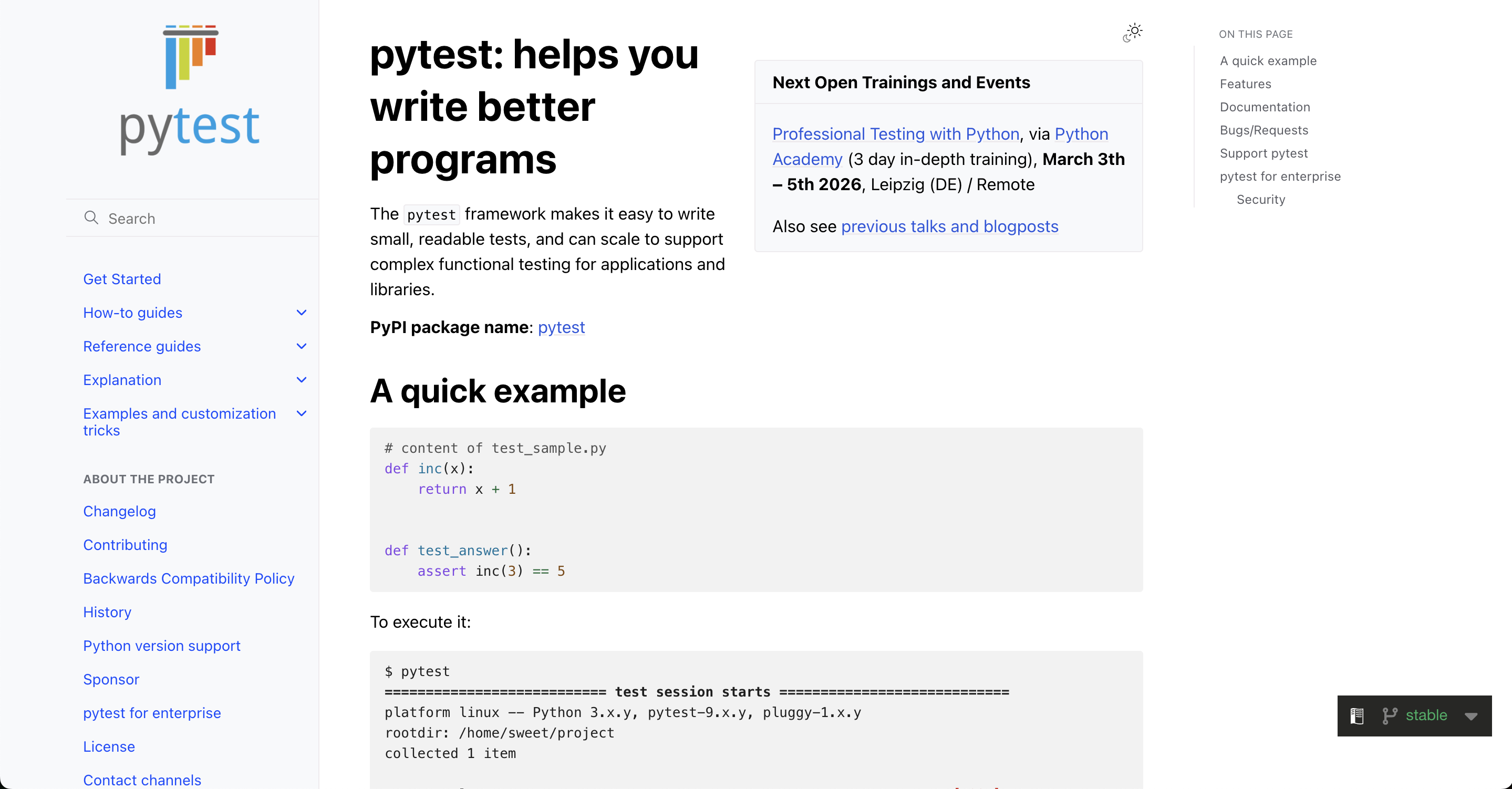
pytest is a common Python alternative to Robot Framework. You write tests as plain Python functions with assert statements, share setup through fixtures, and run the same test against many inputs with @pytest.mark.parametrize. The current 9.x line supports Python 3.10 and later, and the pytest docs list more than 1,300 plugins, including pytest-xdist for running tests across CPU cores and pytest-playwright for browser tests.
Robot Framework vs pytest: both are Python, so the question is syntax. Robot Framework keeps tests readable to people who don't code, with keyword files and HTML logs out of the box. pytest gives developers loops, conditionals, classes, and IDE refactoring without a DSL in between. Teams with mostly Python developers tend to prefer pytest; teams where testers and analysts write tests tend to stay with Robot Framework.
5. Selenium
Selenium WebDriver is a long-standing open-source browser automation tool, with official bindings for Java, Python, JavaScript, C#, and Ruby. Selenium 4 includes Selenium Manager, which downloads the right browser driver for you, and Selenium Grid for running tests across machines and browsers.
Robot Framework vs Selenium: if your Robot Framework suite uses SeleniumLibrary, moving to Selenium directly means writing the same steps in your own code instead of keywords. You gain IDE autocomplete, debuggers, linters, and any library in your language, and you pair Selenium with a test runner such as pytest, JUnit, or TestNG. You also take on page objects, waits, and reporting yourself.
If you are weighing Selenium against a low-code IDE as well, see Katalon Studio vs Selenium.
6. Appium
Appium is a widely used open-source framework for mobile app automation. Appium 3 is the current major version, and drivers cover iOS, Android, and other platforms such as Tizen, desktop, and TV. Client libraries are available for JavaScript, Python, Java, Ruby, and .NET, and Appium Inspector helps you find elements.
Robot Framework vs Appium: Robot Framework's AppiumLibrary wraps Appium in keywords, so the device automation underneath is the same. Using Appium directly with a Python or Java test runner gives you every Appium command as soon as it ships, without waiting for a keyword to wrap it, at the cost of writing and structuring more code yourself.
7. Karate
Karate is an open-source framework for API, UI, and performance testing, plus API mocks. Its core is MIT-licensed, and Karate Labs sells paid plans, such as Pro and Karate Enterprise, for IDE tooling and enterprise add-ons such as Karate Agent. Tests use a Gherkin-style syntax with built-in HTTP calls, JSON and XML matching, and schema assertions, so most API checks need no step definitions.
Robot Framework vs Karate: Robot Framework adds HTTP through RequestsLibrary and asserts on responses with separate keywords. Karate is built around API testing, so JSON matching, data-driven scenarios, and mocks are part of the core syntax. For teams whose suites are mostly API tests, Karate usually reads more compactly; for teams that need mobile or RPA in the same framework, Robot Framework covers more.
8. TestComplete
TestComplete is SmartBear's commercial UI test automation tool for desktop, web, and mobile apps. It runs on Windows and supports keyword-driven tests as well as scripts in JavaScript, Python, and VBScript. SmartBear lists AI-powered object recognition and self-healing tests; self-healing comes with the separately licensed Intelligent Quality add-on. SmartBear does not publish prices, and offers a free trial.
Robot Framework vs TestComplete: both support keyword-driven testing, but TestComplete adds a commercial IDE with object recognition for Windows desktop apps, recording, and vendor support. It suits teams with a large Windows desktop portfolio and a budget for licenses. Robot Framework stays free and runs wherever Python runs.
9. Cucumber
Cucumber is an open-source BDD tool run by the Cucumber Open Source Project. You write scenarios in Gherkin (Given, When, Then) in .feature files, available in English and around 70 other spoken languages, and back each step with a step definition in Java, JavaScript, or another supported language.
Robot Framework vs Cucumber: Robot Framework also supports Given/When/Then, so readable steps alone are not the difference. Cucumber separates the specification (Gherkin) from the automation code (step definitions), which suits teams that write acceptance criteria with product owners first. Robot Framework keeps steps and keyword implementations in one framework with its own libraries and reports. Cucumber does no automation itself, so you add Selenium, Playwright, or an HTTP client underneath.
What to watch with Cucumber:
- Step definitions multiply quickly in large suites without naming conventions.
- Gherkin adds overhead for low-level technical tests.
- BDD works best when stakeholders take part in writing scenarios.
10. Jest with Playwright or Cypress
Jest is a JavaScript testing framework that runs in Node for unit and integration tests. It does not drive a browser itself, so JavaScript teams pair it (or Vitest, a common alternative) with Playwright or Cypress for end-to-end tests:
- Jest or Vitest handles fast tests: business logic, component tests with Testing Library, mocked HTTP integration tests, and snapshots.
- Playwright or Cypress handles browser tests: real user flows such as login and checkout, cross-browser runs, and visual checks.
Robot Framework vs this combination: this setup puts every layer of the test pyramid in one language and repository, which suits frontend teams. Robot Framework covers acceptance-level tests rather than unit tests, so in many organizations it sits alongside a unit test framework rather than replacing one.
Keyword-driven testing compared: Robot Framework, Katalon Studio, and Cucumber
If keywords are what your team values in Robot Framework, three approaches keep them:
- Robot Framework keywords: steps such as
Click id=logincome from libraries, and you compose them into higher-level user keywords in.robotor resource files. Custom keywords are Python, Java, or other library code. - Katalon Studio keywords: steps such as
WebUI.click(findTestObject('Login/btn_login'))come from built-in keyword sets for web, mobile, API, and desktop. You see them as a keyword table in manual view or as Groovy in script view, and custom keywords are Groovy classes. Objects live in the Object Repository rather than in the step. - Cucumber and Karate Gherkin: steps are plain-language sentences. In Cucumber each one maps to a step definition you write; in Karate, HTTP and matching steps are built in.
The trade-off is the same in each case: keywords make tests readable to more of the team, and code makes them easier to refactor. Katalon Studio's two views of one test case are one way to have both.
Which Robot Framework alternative should you choose?
There is no single best replacement, because teams leave Robot Framework for different reasons:
- If the problem is SeleniumLibrary flakiness, try Browser library before you switch tools.
- If developers own the tests, Playwright or Cypress for web, and pytest for Python-first teams.
- If you need mobile, Appium directly, or a tool with a mobile recorder.
- If your suite is mostly APIs, Karate or pytest.
- If acceptance criteria drive your tests, Cucumber.
- If a mixed-skill team wants keywords plus code, and web, mobile, API, and desktop in one tool, Katalon Studio. TestComplete fits a similar team focused on Windows desktop apps.
Whichever you shortlist, port three or four of your most-maintained Robot Framework tests to it and compare how long they take to write, how they behave in CI, and how easy they are to fix when the UI changes.
Frequently asked questions
It depends on your team. As of November 2026, Playwright and Cypress suit developer-owned web testing, pytest suits Python teams, Appium covers mobile, and Karate covers APIs. Katalon Studio suits mixed-skill teams that want keywords plus Groovy code and web, mobile, API, and desktop testing in one tool.
Yes. Robot Framework is actively maintained, on major version 7 as of November 2026, and supported by the non-profit Robot Framework Foundation. Its Browser library runs on Playwright, so it is not tied to older Selenium setups. Teams that switch usually do so for language preference, not because the framework stopped being developed.
Either one, depending on the library you install. Browser library runs on Playwright and drives Chromium, Firefox, and WebKit with automatic waiting. SeleniumLibrary uses Selenium WebDriver. Robot Framework also has AppiumLibrary for mobile apps and RequestsLibrary for HTTP API testing, so the core framework stays the same across all of them.
Neither is better overall. Cypress suits frontend developers who write JavaScript or TypeScript and test web apps in the same repository. Robot Framework suits QA-led teams who prefer readable keyword steps in Python and need mobile, API, or RPA automation alongside web tests. Cypress does not test native mobile apps.
Both run on Python. Robot Framework uses a keyword syntax that people who don't code can read, with HTML logs and reports built in. pytest uses plain Python functions, fixtures, and parametrization, with more than 1,300 plugins. Developer-heavy teams tend to prefer pytest; teams where testers write tests often stay with Robot Framework.
Yes. Katalon Studio builds test steps from built-in keywords for web, mobile, and API, plus Windows desktop on a paid plan, and shows each test case as a keyword table or as Groovy script. You can write custom keywords in Groovy. Unlike Robot Framework, it includes a recorder and Object Repository in one install, with a Free plan.


Test everything. Ship with confidence.
From generating test cases to spotting failures, Katalon's AI works across your entire pipeline, automatically.
