.svg)



Choosing the right automation solution can shape the speed and scalability of your entire QA operation. For enterprise teams, the conversation often comes down to two heavy hitters: Katalon and Playwright.
Both tools help you build reliable automated tests, but they approach the craft from very different angles. One offers a unified ecosystem with built-in orchestration and AI support. The other gives you developer-level control with a fast, code-centric testing engine.
In this guide, we’ll walk you through:
- Where Katalon delivers advantages for large-scale QA teams
- Where Playwright shines for engineering-driven organizations
- Which gaps matter most when planning long-term automation strategy
- A clean, side-by-side comparison to help you decide with confidence
Let’s get started.
Katalon advantages as a comprehensive testing platform

When we look at Katalon from the perspective of an enterprise QA organization, the first thing that stands out is how much ground it covers without forcing you to juggle multiple tools. Instead of stitching together test creation, orchestration, reporting, and execution platforms, you get a single ecosystem that carries the entire lifecycle. This is especially helpful when you need predictable workflows across teams with different skill sets.
At the center of this ecosystem is Katalon Studio, which gives you a robust environment to build automated tests for web, mobile, desktop, and APIs. You can scale fast because the framework is already built in. There’s no need to assemble runners, assertion libraries, locators, or reporting add-ons before your team can write their first test.
Here’s what makes Katalon particularly compelling for enterprise teams:
- Unified testing ecosystem: Studio, TestOps, and TestCloud work together to give you everything from authoring to execution to analytics, reducing tool fragmentation.
- AI-powered acceleration: capabilities like autonomous test case generation and automatic maintenance reduce the amount of manual rework you ordinarily face after UI or API changes.
- Enterprise-grade governance: requirements mapping, test ownership, scheduling, and defect traceability help you enforce standards across multiple squads.
- Rich coverage across AUTs: web, mobile (native and hybrid), API, and desktop automation all live in a single platform.
- Parallel execution at scale: the combination of Runtime Engine and TestCloud lets you dramatically shorten regression cycles.
- Low onboarding friction: testers of varying technical backgrounds can work productively thanks to built-in keywords, record-and-playback, and reusable object repositories. Engineers still retain full scripting flexibility when they need it.
To help you visualize how broadly Katalon supports automation across application types, here’s a simple overview:
| Application type | Katalon coverage |
|---|---|
| Web UI | Extensive built-in capabilities for locators, self-healing, and visual artifacts |
| Mobile | Native and hybrid app support across Android and iOS with emulators, simulators, and real devices |
| API | REST, SOAP, and GraphQL automation with built-in assertions, authentication, and data-driven capabilities |
AI that does the heavy lifting for you
Katalon is also one of the first platforms to embed AI directly into the testing lifecycle. The AI-driven capabilities simplify maintenance and expand your coverage without adding more manual work.
- Automatic test maintenance: AI detects locator changes and helps you fix test objects before they break.
- TrueTest for AI-generated regression testing: TrueTest analyzes real user behavior in production and generates regression tests automatically.
- Smart analytics in TestOps: Identify flaky tests, detect hidden risks, and pinpoint failure patterns faster.
TestOps: Visibility and control at enterprise scale
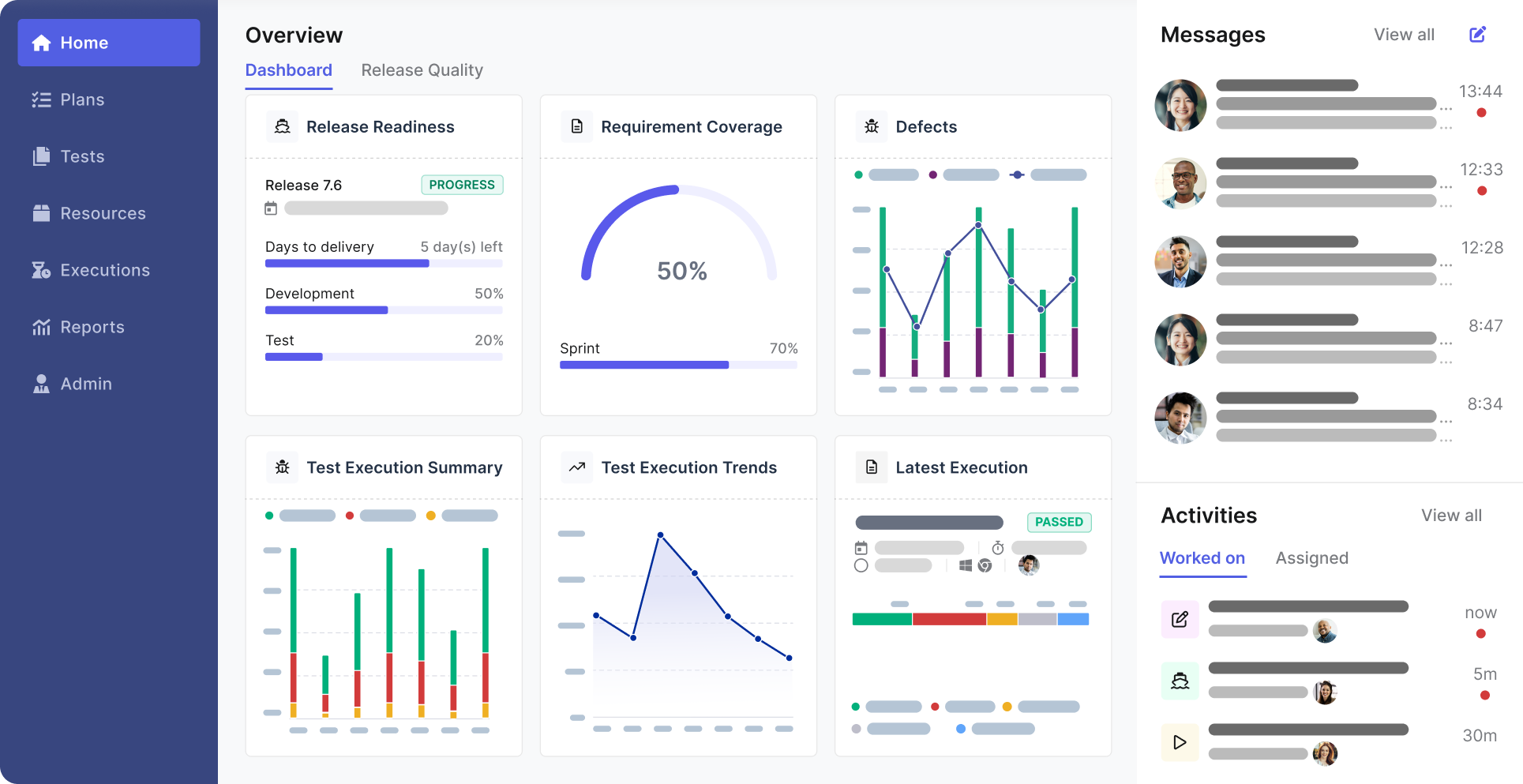
If you’ve ever struggled to keep track of hundreds or thousands of tests, TestOps will feel like a relief. It centralizes your entire testing operation so you can monitor quality trends, orchestrate executions, and maintain traceability across manual, automated, and AI-generated tests.
- End-to-end test management: Store, organize, and track every test case in one place.
- Real-time dashboards: View coverage, pass/fail rates, flaky test analytics, and requirement traceability.
- Execution orchestration: Schedule runs in CI, nightly builds, or custom event triggers.
TestCloud: On-demand execution without infrastructure overhead
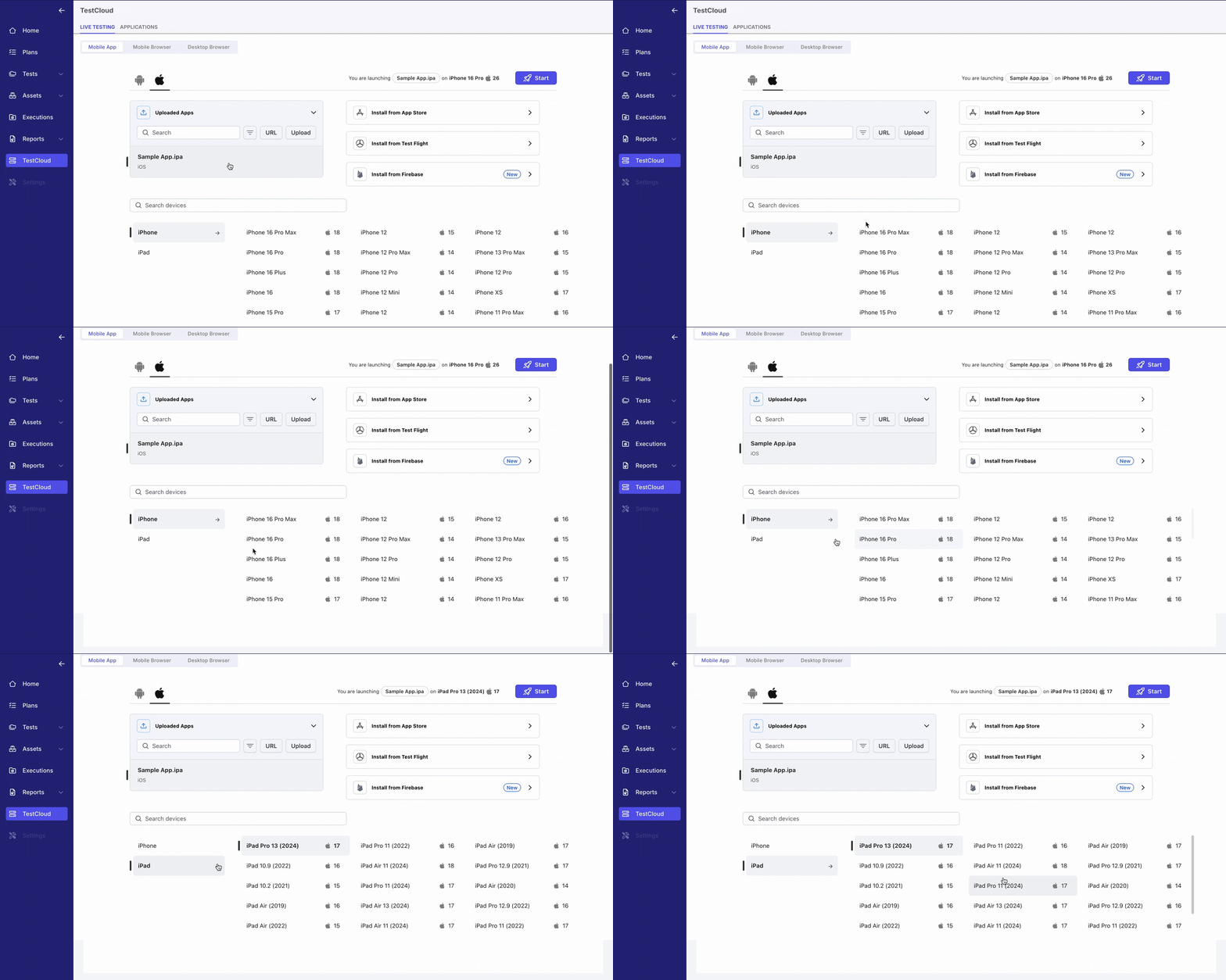
If you’re tired of maintaining device labs, TestCloud gives you instant execution environments. You can run test suites on thousands of browser-device-OS combinations without touching a single VM or emulator.
- 3,000+ real-world environments: From Chrome and Safari to Android and iOS device models.
- Flexible parallel execution: Slash regression runtime even on huge suites.
- Seamless integration: Trigger cloud runs directly from Katalon Studio or TestOps.
Put simply, the Katalon Platform offers one of the broadest and most scalable automation ecosystems available today. Whether you're managing small agile teams or enterprise-wide QA operations, Katalon gives you the tools to accelerate quality without adding complexity.
📝 Ready to see how Katalon fits your testing team? Request a personalized demo and explore the platform in action.
Playwright advantages as a modern web testing framework
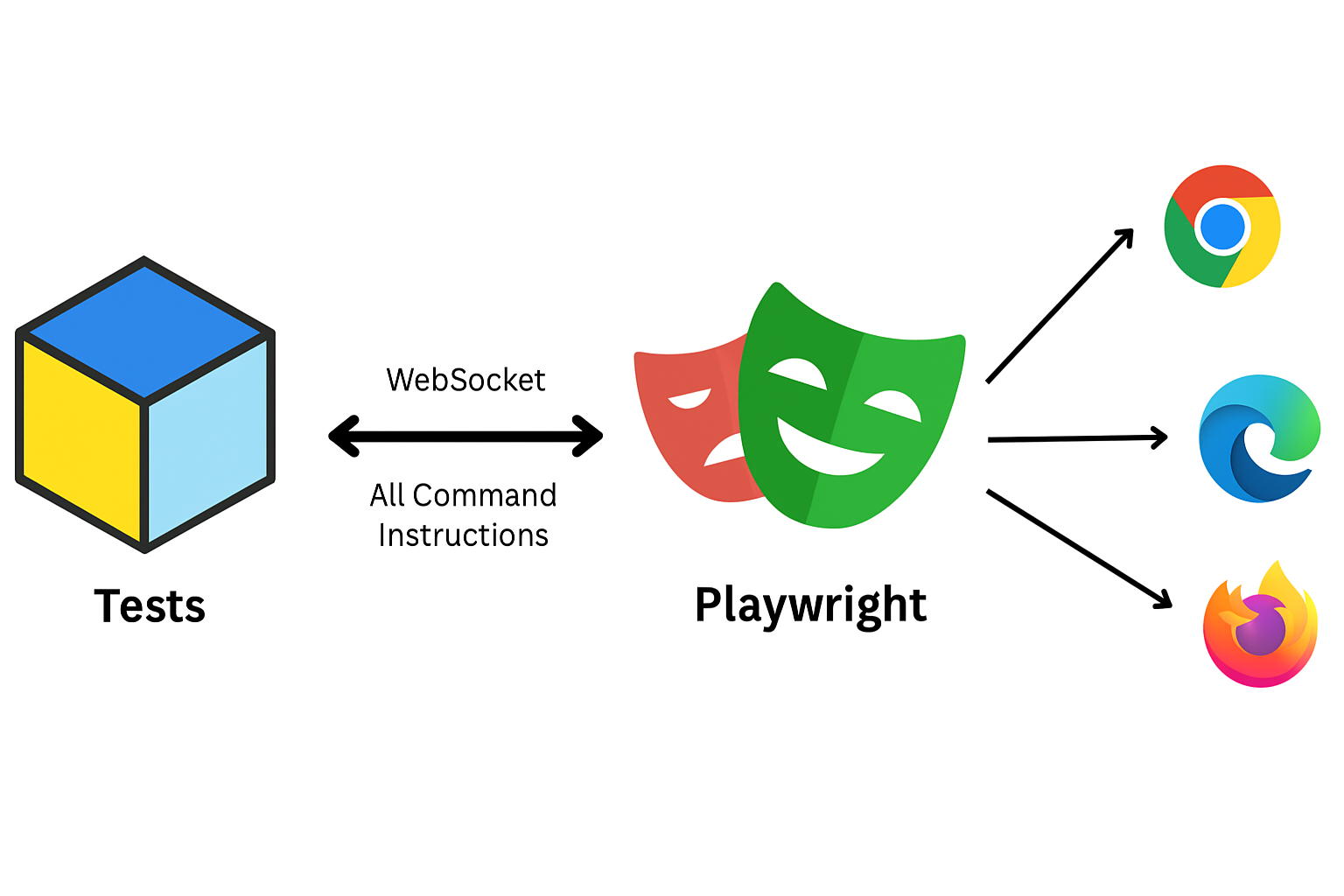
Playwright has earned a strong reputation among engineering-driven teams for its speed, precision, and developer-friendly foundation. If your organization leans heavily toward code-first workflows, you’ll immediately notice how naturally Playwright slots into modern development practices. It’s fast, reliable, and deeply aligned with how engineers think about automation.
What makes Playwright stand out is its direct communication with browser engines. That means your test execution are faster and sharper even under complex scenarios. When you’re supporting fast-moving feature releases, this level of stability can mean the difference between shipping confidently or chasing flaky tests late at night.
Here are the strengths we see most often:
- High-speed, low-flake execution: Playwright controls the browser at the protocol level. You get deterministic waits, auto-retries, and fewer synchronization failures. This alone can dramatically cut down your debugging hours.
- Engineer-first workflows: If your team prefers direct scripting instead of layered abstractions, Playwright’s minimalistic and expressive API hits the sweet spot. It supports TypeScript, JavaScript, Python, Java, and .NET, making it easy to adopt no matter your backend language.
- Cross-browser and cross-platform coverage: You can run tests across Chromium, Firefox, WebKit, and even mobile emulation, all with near-identical APIs. This consistency makes multi-browser automation feel far less tedious.
- Excellent debugging tools: Features like trace viewer, step-by-step execution, and time travel debugging offer engineers incredible visibility when diagnosing failures.
- CI-friendly architecture: Lightweight dependencies and headless options let you scale execution across GitHub Actions, Jenkins, Azure DevOps, or any other pipeline without introducing special runtime constraints.
Playwright is also well-suited for teams that value transparency and control. There are no black-box layers; you see exactly what the test does, why it waits, and where it fails. For many developers, this clarity provides a sense of confidence that’s hard to match in more abstracted frameworks.
To give you a clearer picture of how streamlined Playwright can be, here’s a simple example of a test that verifies navigation and a page title:
All in all, Playwright shines when your QA function is tightly integrated with engineering. If your team iterates quickly, relies heavily on code reviews, and prefers absolute control over the test lifecycle, Playwright often feels like the natural fit.
Katalon gaps you should know
While Katalon brings a powerful, end-to-end testing ecosystem to enterprise teams, it’s still important for you to understand where the platform may fall short depending on your engineering culture or project needs. These gaps don’t necessarily hinder most organizations, but they do shape how technical teams adopt and scale the tool.
Let’s walk through the most relevant limitations so you can make an informed decision.
- Less flexibility for highly bespoke automation setups: Katalon abstracts a lot of heavy lifting for you, which is why many QA teams love it. However, some engineers prefer deep customization and they want to build a framework from scratch. Note that Katalon does allow customized scripting for more advanced use cases. In fact, you can unlock even more useful capabilities of Katalon if you know a little bit of coding. For example, you can create effective test scripts with Statements in Katalon Studio:

- Advanced debugging expectations: Although Studio provides logs, snapshots, and execution details, engineers who are used to full-code frameworks sometimes expect deeper debugging hooks that mirror IDE-native experiences.
None of these gaps are deal-breakers by themselves. Rather, they highlight the trade-offs that come with choosing a platform engineered for consistency and ease of adoption. If your teams prioritize total flexibility above all else, you may feel constrained at moments. But if you value predictable workflows and a fully integrated ecosystem pre-built for a QA team that doesn't have the bandwidth to do so, these limitations tend to fade into the background rather quickly.
Playwright gaps you need to consider
Playwright is an impressive engine for browser automation, especially if your QA function is tightly embedded in engineering. However, when we look at it through an enterprise lens, a few structural gaps start to appear. These are not flaws in the framework itself; they are consequences of its design philosophy: lean, code-first, and intentionally unopinionated.
If you are considering Playwright for a large QA organization, here are the areas where you may feel the friction most clearly.
- No built-in test management or traceability: Out of the box, Playwright does not give you requirements mapping, test case hierarchies, or defect traceability. You will need to connect it to separate systems or maintain your own conventions to get a full end-to-end picture.
- Reporting and analytics require extra work: While you can generate reports through libraries and custom tooling, there is no native analytics layer with dashboards. Most enterprises end up investing engineering time to create and maintain this visibility.
- Infrastructure is your responsibility: Grid management, environment orchestration, and large-scale parallel runs are not handled by Playwright itself. You either wire in cloud providers, build internal solutions, or operate additional services to reach enterprise-level scale.
- Higher barrier for non-developer testers: Because everything revolves around code, manual testers or business-focused QA professionals may struggle to contribute without first ramping up on scripting and tooling. This can narrow your hiring pool or slow down onboarding.
- Limited “batteries-included” ecosystem: Playwright is intentionally focused on browser automation. Test management, execution scheduling, and advanced governance are left to you to assemble from multiple tools, which adds complexity over time.
- Operational overhead at scale: As your test suite grows, you need to manage configuration, process standards, library versions, and internal frameworks. None of this is packaged for you, so consistency across teams can become a continuous maintenance effort.
To make these trade-offs easier to see, here is a quick snapshot of where Playwright typically requires extra investment from enterprise teams:
| Area | What’s missing by default | Impact on enterprise teams |
|---|---|---|
| Test management | No native test case repository or requirement linkage | You must maintain structure in external tools and keep them in sync |
| Reporting | No built-in dashboards or coverage analytics | Engineers spend time building visualizations rather than tests |
| Infrastructure | No managed cloud grid, no native device farm | Scaling tests requires extra tooling and dedicated ownership |
| Collaboration | Code-heavy workflows, few visual layers | Harder for non-coders to participate in automation efforts |
In short, Playwright gives you a powerful engine but expects you to build the vehicle around it. If you already have strong internal engineering capacity and a clear strategy for reporting, management, and infrastructure, this might be exactly what you want. If not, you should factor in the hidden cost of building and maintaining everything that sits around the framework before committing to it as your primary enterprise solution.
Katalon vs Playwright: Side-by-side comparison
Now that we’ve looked at each tool individually, it’s time to bring everything together. This comparison is where most teams pause and reflect because the right decision usually depends less on feature lists and more on how your QA organization actually operates. You may lean toward governance, predictability, and cross-functional collaboration, or you may value raw speed and engineering depth.
To help you see the contrast clearly, we’ve broken down the two platforms across the dimensions that matter most to enterprise QA teams. As you read through this table, think about where your current bottlenecks are, and which approach aligns better with the testing culture you want to build.
| Category | Katalon | Playwright |
|---|---|---|
| Setup & onboarding | Fast onboarding with built-in frameworks, visual tools, and reusable components | Engineering-heavy setup that requires familiarity with coding and tooling |
| Maintenance | AI-powered test healing and centralized object management reduce maintenance overhead | Manual updates and engineering-managed abstractions; no automatic maintenance |
| Execution environments | Local, remote, and cloud execution through TestCloud with minimal configuration | Requires integration with third-party cloud providers or internal infrastructure |
| Reporting & analytics | Rich dashboards, coverage heatmaps, and flaky test detection through TestOps | No built-in analytics; teams must build reports or adopt additional tools |
| Skill requirements | Suited for mixed teams including manual testers, SDETs, and automation engineers | Best for code-heavy teams deeply embedded in engineering workflows |
| AI capabilities | Integrated AI features for test generation and maintenance | No native AI capabilities built into the framework |
| Enterprise governance | Strong governance features including requirements mapping and audit trails | Governance must be built or replicated using external systems |
| Best fit | Organizations seeking a unified platform to scale automation quickly | Engineering-centric teams that prefer full control and lightweight tooling |
When you zoom out, the distinction becomes clearer. Katalon acts as an all-in-one testing ecosystem designed to streamline automation across diverse teams. Playwright, on the other hand, offers a powerful, code-first engine that excels when you have strong internal engineering resources and want deep control over your automation stack.
Both tools are capable. The real question is: which approach aligns better with the maturity, structure, and velocity of your QA organization? Once you know the answer, the decision becomes much easier, and far more strategic.

|
