


With the rapid adoption of AI-driven coding tools, software development is experiencing a seismic shift. Increasingly, developers rely on tools like GitHub Copilot and other generative AI solutions (often loosely grouped under the label “vibe coding”) that now account for roughly 30% of code output in leading organizations.
This trend raises significant questions for QA teams: What happens when AI significantly contributes to the codebase, and how does this reshape the landscape of software testing?
New Challenges: Quality and Uncertainty
AI-generated code is changing the way teams build software. It accelerates development, unlocks scale, and helps developers ship more, faster. But with that speed comes a new kind of challenge, which is uncertainty around quality.
Suddenly, there’s more code than ever. And not all of it is written by humans.
The problem is that you can’t always tell what AI-generated code is doing under the hood. It might look clean, and might even pass initial tests, but it can still hide subtle bugs that traditional testing might miss.
Fighting AI With AI: New Strategies in Testing
As AI-generated code floods the pipeline, testing teams are realizing that traditional methods can’t keep up. The answer? Use AI to test AI.
The logical response to AI-generated code is to utilize AI-driven testing methods. Essentially, we’re fighting AI with AI.
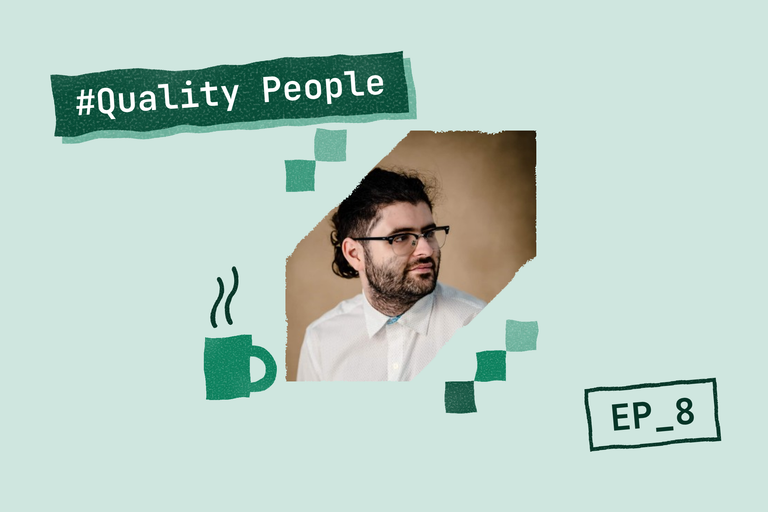
 - Cristiano CaetanoVP of Product at Katalon
It’s a smart move. AI-powered testing brings speed, scalability, and intelligence to a process that can no longer afford to be manual. AI-on-AI testing gives teams the visibility and control they need to test smarter, not harder. It helps QA scale with development, without compromising on quality, even as complexity grows.
Shifting Roles: Elevating Human Testers
Contrary to concerns that AI might replace human testers, the opposite trend emerges. Cristiano Caetano explains, “Automation doesn’t eliminate jobs; it transforms them. Repetitive tasks can be automated, allowing testers to focus on strategic, creative, and complex areas of quality assurance.”
In this new paradigm, testers’ roles evolve significantly. They become more focused on areas like user experience, security, and overall digital experience assurance. “The future of testing revolves around delivering seamless, holistic user experiences rather than merely validating functional correctness,” Cristiano emphasizes.
Preparing for the AI-Driven Future
To adapt to this emerging reality, QA teams must proactively embrace these changes by investing in continuous learning, familiarizing themselves with AI-driven testing tools, and upskilling to address broader and more strategic quality challenges. Cristiano advises, “Testers need to continually update their skills to navigate these changes effectively. Those who adapt early will be well-positioned to lead.”
Conclusion
As AI continues transforming software development, the quality assurance landscape evolves in tandem. Vibe-coding, with its blend of speed and unpredictability, demands that QA teams rethink traditional strategies. By using AI-driven testing, human testers can ensure high-quality software delivery while expanding their roles into more strategic, impactful areas.
In the AI era, quality assurance is not just about verifying code. It's about assuring excellence in digital experiences.
Frequently asked questions
It refers to developers using AI-driven coding tools (like GitHub Copilot and other generative AI solutions) that can produce a significant share of code output.
Because it can introduce uncertainty and subtle bugs—code may look correct and even pass initial tests while still hiding issues traditional testing might miss.
With more code and added uncertainty, conventional approaches may not scale fast enough or detect the subtle failures that can slip through surface-level checks.
It means adopting AI-driven testing methods to bring speed, scalability, intelligence, and better visibility/control to match the pace and complexity of AI-influenced development.
It shifts testers away from repetitive functional checks toward more strategic areas like user experience, security, and broader digital experience assurance.




Test everything. Ship with confidence.
From generating test cases to spotting failures, Katalon's AI works across your entire pipeline, automatically.
