


A conversation with Ivan Merola, senior QA engineer, on the rollback nobody tested, the false positives that crashed half a client's Android users, and why a quiet day with one task is still the best day.
The Quality People series has so far heard from practitioners, trainers, and the engineers who build testing tools themselves, including Gastón Marichal, Minh Huy Dao, and Bas Dijkstra. This time we talked to someone who has tested security software from the inside.

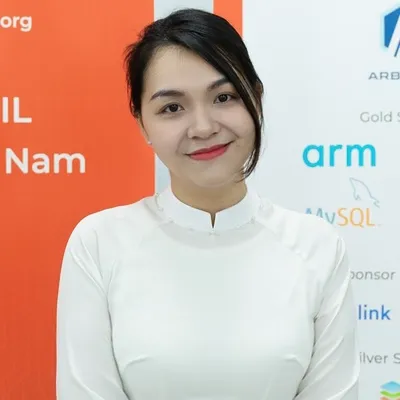
Ivan Merola has been a tester for more than 10 years, across big and small companies, mobile and browser products. His main expertise is UI testing, manual and automated. Today he works as a senior QA engineer on a web application for an EU public agency, as an external contractor. Before that, he tested a security SDK at a cybersecurity startup, where a missed bug is not just a bug but a security problem for someone else's users.
We asked him for stories rather than principles. He gave us a few that most testers will recognize, and a couple they will hope never to live through.
"I Break Stuff, Get Paid for It"
Asked to explain his job to a friend outside tech, Ivan starts with the version everyone remembers.
"Jokes aside, right now I'm testing a web application, contributing to the best quality of the product with both my manual testing and automation scripts. Just recently, I've been getting more and more familiar with vibe coding and all that it offers.
"The product is for an EU public agency, so it goes without saying that quality is highly valued in this case. Our stakeholders are Member States in the EU."
A Developer Who Became a Tester by Coincidence
Like many people in this series, Ivan did not plan a career in testing. He came to it from development, after a project fell through.
"Coincidence, of course. I doubt there is one tester who knew they were going to become a tester when they were 15 years old.
"I did a bachelor's degree, then started my first job as a developer on a project that allowed me to work abroad. That project got cancelled between the consulting company and the final client, so they sent us back home. I wanted to find a new project abroad, and an opportunity came up with an offer to be a tester. I had no idea what it was. They hired me because of my coding skills, and here I am 10 years later."
That coding background matters later in the story. When he moved into security testing, it was exactly what the work demanded.
A Good Day Has No Meetings
Testing is often described as a collaborative, communication-heavy role. Ivan agrees, and still knows what his ideal day looks like.
"No meetings, no interruptions, just one task to focus on 100%.
"I am quite a loner, I must say. I understand all the other qualities a tester needs to have, but man, do I love a quiet, peaceful day where I can get sh** done.
"When I'm not working, I'm probably with my family, taking care of my daughters. If I ever get some me time, you can find me on chess.com."
TestCat: A Conference for Catalan Testers, Still Waiting for Its First Edition
Ivan started TestCat as a testing conference for the Catalan-speaking community. We asked why he would build something new rather than join an existing event. His answer starts with a gap that speakers of smaller languages will recognize.
"Like everything in life for Catalan speakers, we don't have many references in many topics. All the good professionals tend to choose English or Spanish, because it gives them a bigger audience, and that's very understandable."
He is also candid about where the project stands today.
"To be honest, I haven't been able to launch the first edition yet. I got busy with life and I parked it to the side, but it's still a project that I look forward to."
It is an honest answer, and a familiar one for anyone who has tried to build a community alongside a full-time job. The need he describes has not gone away: practitioners who want to learn and share in their own language still have very few places to do it.
Why Slow Testing Means Less Quality
Ivan's conference talk focuses on streamlining testing and making it insight-driven. We asked where the time goes when a testing process is slow. His answer goes straight to the cost.
"If the testing process is slow, it usually means you get to cover less functionality in the same time. So, less quality overall.
"That's why automation is so important for the regression test cases. It lets you focus your time on the new stuff that hasn't been covered yet, and on new edge cases that you can find by exploring the product."
It is the same trade-off behind most automated regression testing strategies: let automation guard what already works, so people can spend their attention on what is new. Ivan's point is that the trade-off is about quality, not just speed. Time spent re-checking old flows by hand is time not spent finding the bugs that matter in the next release, which is where manual testing still wins.
The Rollback Nobody Tested
We asked Ivan for a story rather than a lesson: a release that went wrong, or a call he got wrong. He picked one from his time at the cybersecurity startup.
"We had a bug in production, which meant we had to roll back to the previous version. Well, let's say the rollback process wasn't properly tested. And it broke the application for millions of users. That was a tough moment."
"We had to create that process after the bad experience of upsetting our clients."
Most teams test the release. Far fewer test the way back. A rollback is a deployment like any other, with its own data, versions, and dependencies, and it usually runs under pressure when something has already gone wrong. Ivan's story is a reminder that "we can always roll back" is only true if someone has checked that you can.
Watching CrowdStrike: "Is This Us?"
In July 2024, a faulty CrowdStrike update affected an estimated 8.5 million Windows devices worldwide. Ivan was working at a cybersecurity company when it happened, and the news landed close to home.
"It made us extra careful with what we were going to release. At the moment the CrowdStrike incident happened, I was working for a cybersecurity company, and we had gone through very similar issues. It didn't affect as many users in our case, but when we heard the news, we were saying, 'Is this us?'
"This should have been avoided, especially coming from such a big company with so many resources."
That reaction is telling. For a team that had already lived through its own bad release, a public incident at that scale was not abstract. It was a prompt to look harder at their own release checks before the next one went out.
Testing a Security SDK Is Black-Box Work
At the startup, Ivan tested an SDK: a product whose users are other developers, where a failure is a security problem rather than a cosmetic one. We asked what testing looks like in that situation.
"Testing is very black box in that situation. If your expertise is in UI testing, it hits you right in the face."
And the thing they got wrong at first:
"One of the many things we got wrong was the false positives. Our product was meant to detect cyber threats and stop the potential attacker by crashing our clients' application.
"You can imagine what goes through our clients' minds when they see that we're crashing 50% of their Android users just because we thought it was a security threat, when maybe it was only a different mobile configuration from one of their phone companies that uses a modified OS."
The false positive problem is the security version of a flaky test, with much higher stakes. For anyone testing on Android, it is also a reminder of how much device and OS variation sits outside a standard test lab, a challenge covered in our guide to mobile testing strategy.
Where AI Helped in Security: Spotting Patterns
We asked Ivan where AI is useful in cybersecurity today and where it is oversold. He was clear about the limits of what he can speak to.
"I must be honest. I'm not working for the same cybersecurity company anymore, so I cannot talk about the latest AI developments and how they might be affecting it.
"I can say that when I was there, we were using AI in the sandbox. With all the users we were protecting, we had very interesting information about their devices (manufacturer, country, and so on), and we were matching that data with the different kinds of cyber attacks we were detecting. Our goal was to feed that information to the 'AI' so it could spot patterns and help us prevent a massive attack just by identifying a few of them."
His careful answer is worth noting in itself. In a field crowded with confident claims about AI, he talks only about what he saw in practice: AI as a way to connect signals across a large user base, not as a replacement for the people deciding what counts as a threat.
What to Ask Your Team Before the Next Release
Ivan's stories share a thread. The rollback that broke the app, the false positives that crashed real users, and the CrowdStrike news that made his team ask "is this us?" all come from paths teams assume will work. A few questions worth bringing to your next planning session:
The fix is rarely a new tool. It is testing the parts of the process that nobody thought to test, then making that a habit.
For now, Ivan has stepped back from public speaking. He and his family welcomed their second daughter last year, and he is happy with life as it is. He is still open to interviews and podcasts, so if you want to keep the conversation going, you can find him on LinkedIn. For more conversations like this one, read the rest of the Quality People series, starting with Bas Dijkstra on valuable feedback and accountability.




Test everything. Ship with confidence.
From generating test cases to spotting failures, Katalon's AI works across your entire pipeline, automatically.
