.svg)




Katalon and Sauce Labs often show up in the same shortlists, but they solve very different parts of your quality strategy. One focuses on end-to-end test creation, management, and analytics. The other is built to give you massive, reliable cloud infrastructure for running tests at scale across browsers and devices.
If you’re leading an enterprise QA organization, the real question isn’t “Which logo is better?” but rather “Which platform fits the way our teams design, run, and scale tests today, and tomorrow?” In this comparison, we’ll walk through that decision from a practical, hands-on point of view so you can quickly see where each tool fits.
- What Katalon brings to the table as an all-in-one automation platform
- Where Sauce Labs excels as a cloud-based testing and device infrastructure provider
- The key strengths and gaps of each tool for enterprise QA teams
- A side-by-side breakdown to help you decide when to choose one, the other, or use them together
Let’s dive in!
Katalon advantages as a comprehensive testing platform

When we look at Katalon next to a platform like Sauce Labs, the biggest advantage is immediately clear: Katalon is not just an execution grid. It’s a full-stack testing platform where you can design, automate, orchestrate, and analyze tests in one place instead of stitching together multiple tools.
Katalon Studio sits at the heart of this experience. It gives your teams ready-made frameworks for web, mobile, API, and desktop testing, so you don’t waste time deciding which libraries to combine or how to structure your codebase. Testers can start with a low-code interface, while engineers still have all the hooks they need to implement complex logic and custom integrations.
For enterprise QA teams, this “all-in-one plus flexibility” model shows up in a few concrete ways:
- Unified test authoring for all channels: You can cover web, mobile, API, and desktop apps from a single platform, instead of managing separate tools or frameworks for each technology stack.
- Low-code for speed, script-level control for depth: Business testers can build flows with keywords and UI actions, while automation engineers extend or optimize them using Groovy/Java-based scripting when needed.
- Built-in data-driven and BDD capabilities: Data files, external sources, and BDD-style workflows are supported out of the box, which keeps complex regression suites maintainable and easier to reason about.
- Tight integration with Katalon TestCloud: You can trigger cross-browser and cross-platform execution in the cloud directly from your projects, without having to manually wire up external grids or device farms.
- Centralized test management and analytics via TestOps: Scheduling, flakiness analysis, coverage insights, and execution history all live in one place, giving you a consolidated view of quality across teams and pipelines.
- CI/CD-friendly from day one: Katalon integrates smoothly with tools like Jenkins, Azure DevOps, GitHub Actions, and GitLab CI, so you can treat automated tests as first-class citizens in your delivery process.
- AI-assisted maintenance and stability: Self-healing locators and smarter failure insights help you reduce the time spent chasing brittle tests and keep your regression suites stable over the long run.
Another practical advantage is how easily Katalon scales across roles. You don’t have to choose between a “tool for testers” and a “tool for engineers” and then hope they play nicely together; instead, everyone works in the same ecosystem with different levels of abstraction. Non-technical users can contribute real coverage, while technical staff still keep architectural control and enforce standards.
Finally, because creation, execution, and reporting are tightly connected, you get traceability that is often missing in grid-only solutions. You can answer questions like “Which requirement does this failing test map to?” or “Which suite is causing the most flaky failures?” without jumping between dashboards or exporting raw logs into spreadsheets.
AI that does the heavy lifting for you
Katalon is also one of the first platforms to embed AI directly into the testing lifecycle. The AI-driven capabilities simplify maintenance and expand your coverage without adding more manual work.
- Automatic test maintenance: AI detects locator changes and helps you fix test objects before they break.
- TrueTest for AI-generated regression testing: TrueTest analyzes real user behavior in production and generates regression tests automatically.
- Smart analytics in TestOps: Identify flaky tests, detect hidden risks, and pinpoint failure patterns faster.
TestOps: Visibility and control at enterprise scale
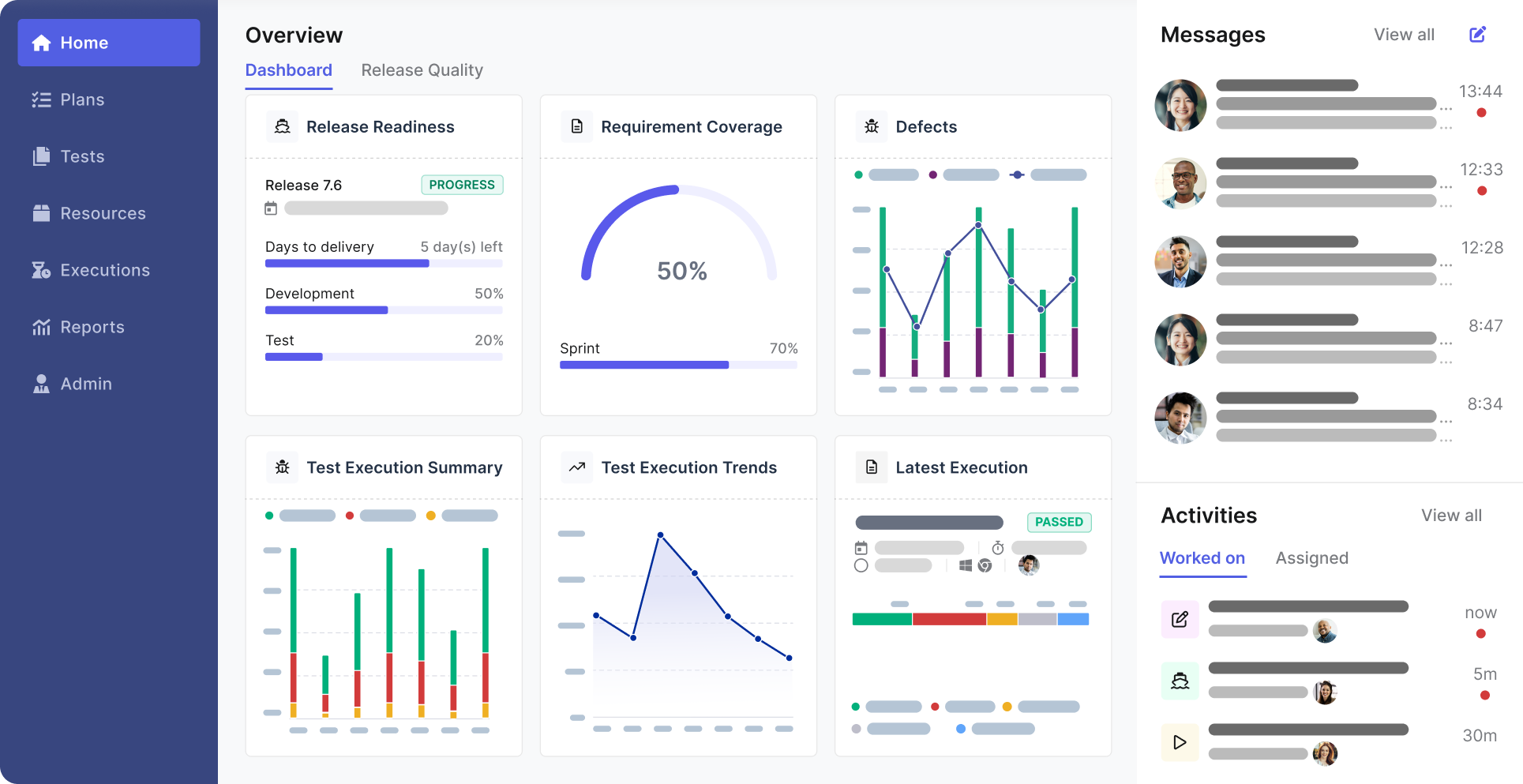
If you’ve ever struggled to keep track of hundreds or thousands of tests, TestOps will feel like a relief. It centralizes your entire testing operation so you can monitor quality trends, orchestrate executions, and maintain traceability across manual, automated, and AI-generated tests.
- End-to-end test management: Store, organize, and track every test case in one place.
- Real-time dashboards: View coverage, pass/fail rates, flaky test analytics, and requirement traceability.
- Execution orchestration: Schedule runs in CI, nightly builds, or custom event triggers.
TestCloud: On-demand execution without infrastructure overhead
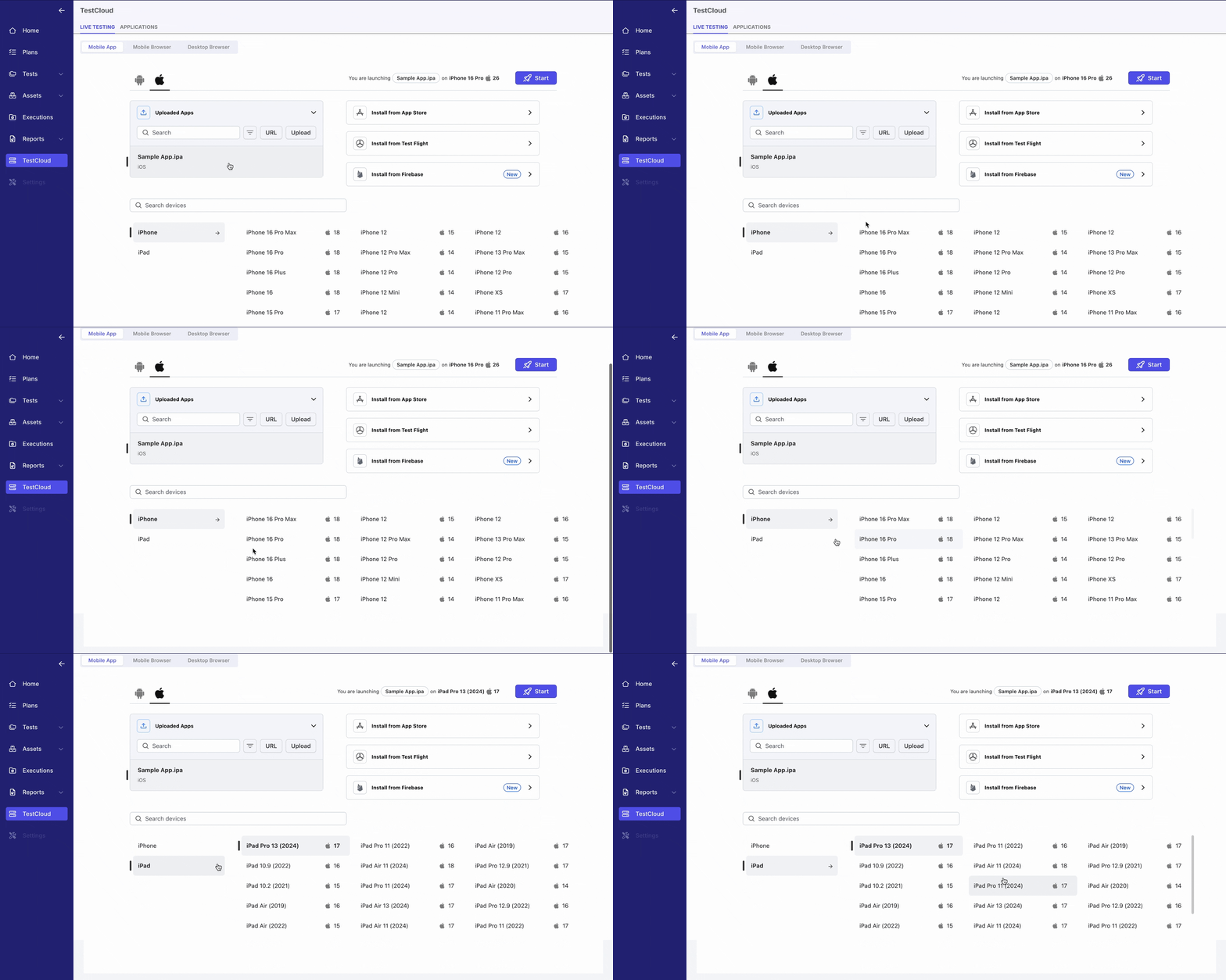
If you’re tired of maintaining device labs, TestCloud gives you instant execution environments. You can run test suites on thousands of browser-device-OS combinations without touching a single VM or emulator.
- 3,000+ real-world environments: From Chrome and Safari to Android and iOS device models.
- Flexible parallel execution: Slash regression runtime even on huge suites.
- Seamless integration: Trigger cloud runs directly from Katalon Studio or TestOps.
Put simply, the Katalon Platform offers one of the broadest and most scalable automation ecosystems available today. Whether you're managing small agile teams or enterprise-wide QA operations, Katalon gives you the tools to accelerate quality without adding complexity.
📝 Ready to see how Katalon fits your testing team? Request a personalized demo and explore the platform in action.
Sauce Labs advantages
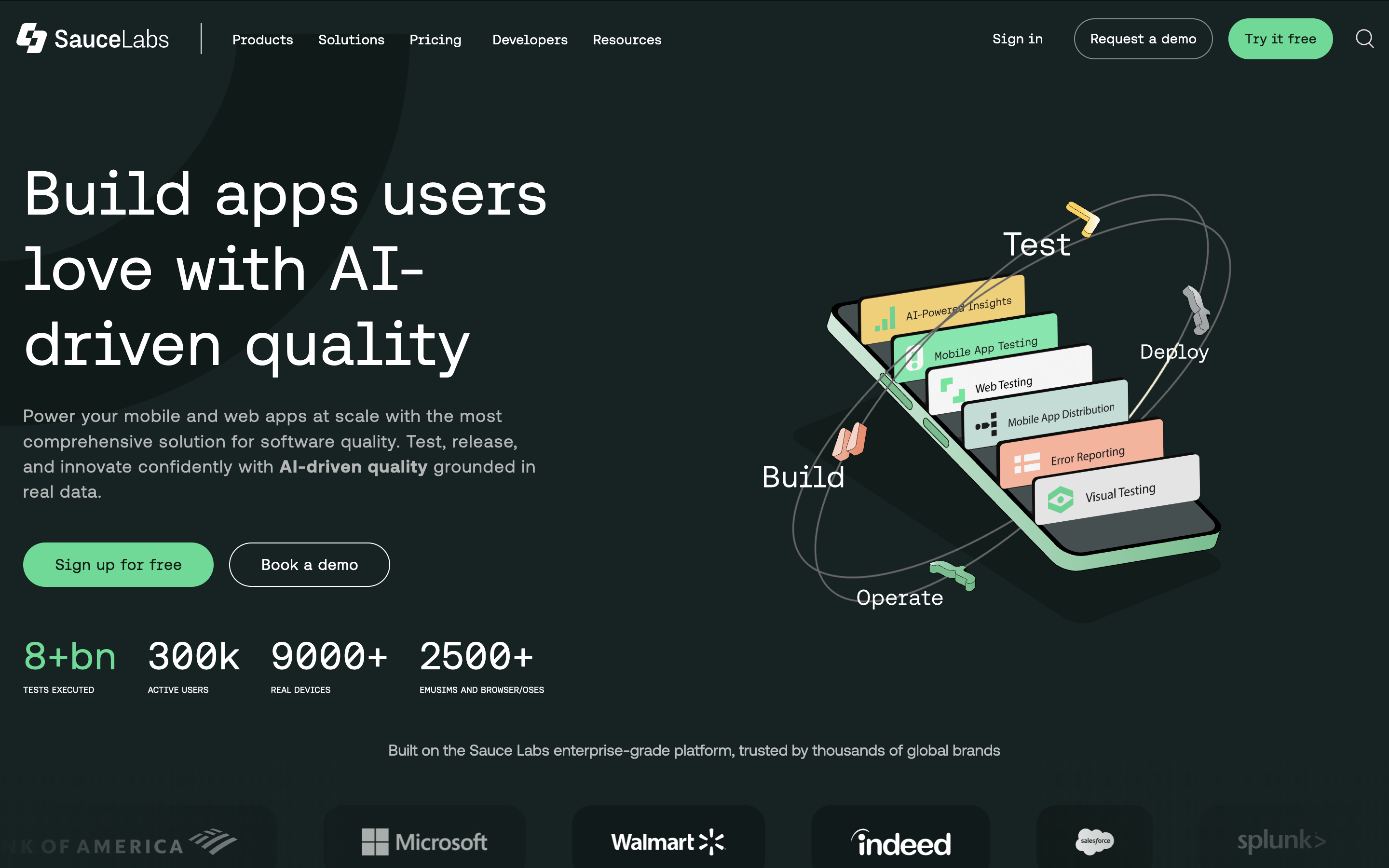
Sauce Labs has long positioned itself as a powerhouse for cloud-based testing, and if you're working in an enterprise environment where reliability, scale, and device coverage matter more than anything else, the platform quickly proves why it's trusted globally.
As we walk through these advantages, think of Sauce Labs less as a single tool and more as a vast execution grid built to absorb whatever volume, browser mix, or mobile complexity your team throws at it.
One of the most compelling reasons teams adopt Sauce Labs is simple: you no longer need to maintain your own device lab or browser farm. Everything from legacy OS versions to the newest mobile devices lives in their cloud, updated, patched, and ready to run tests in parallel. This alone frees up a substantial amount of engineering time that would otherwise be spent maintaining infrastructure instead of accelerating releases.
You’ll also notice that Sauce Labs provides strong observability into test behavior. Video capture, network logs, console output, and deep device diagnostics come baked into the workflow. When a test fails unexpectedly, you have layers of evidence to unravel what truly happened. This is especially valuable for distributed teams where triage needs to happen asynchronously.
Here are the advantages that tend to stand out the most:
- Massive device and browser coverage: Thousands of real devices and a broad spectrum of operating systems, browsers, and versions are instantly available. This eliminates the bottleneck of sharing internal hardware or relying on sparse test environments.
- High concurrency at enterprise scale: Sauce Labs can reliably run hundreds or thousands of tests in parallel across their global infrastructure, giving you the throughput needed for fast CI/CD cycles.
- Deep debugging artifacts: Every test run generates valuable data—logs, screenshots, network insights, and videos—all stored and accessible from a unified dashboard, making failures far easier to diagnose.
- Robust Selenium and Appium support: Whether you're automating web or native mobile workflows, Sauce Labs integrates seamlessly with the open-source tools your team already uses.
- Enterprise-grade SLAs and security: SOC 2 compliance, SSO, fine-grained access controls, and predictable performance SLAs give engineering and security leaders the confidence they need.
- Global infrastructure footprint: Multiple data centers across regions improve performance and reduce latency, especially for organizations with distributed engineering teams.
- Visual and mobile testing capabilities: Built-in tools for visual testing, mobile biometrics, geolocation, and device-specific behaviors extend your coverage beyond basic UI flows.
When you zoom out, Sauce Labs excels in scenarios where coverage and reliability are strategic priorities. It shines brightest when you need a testing backbone that feels infinite, so your teams can focus on quality engineering rather than infrastructure firefighting.
Katalon gaps that teams should know
While Katalon brings a unified and accessible automation ecosystem to the table, we also need to acknowledge where it may not fully satisfy teams with highly specialized or infrastructure-heavy requirements. These gaps don’t necessarily diminish the platform’s value, but they do influence how well it aligns with organizations that demand deep customization or already operate massive cloud execution pipelines.
Here are the areas where gaps tend to surface most clearly:
- Framework customization: You can extend the platform with custom keywords and libraries, but you’re still working within Katalon’s architectural boundaries. Some teams want deeper freedom to redefine test runners, assertion engines, or execution workflows.
- Heavy mobile-debugging workflows: While mobile automation is supported, advanced device debugging—such as live performance profiling, crash logs, or deep network analysis—can require external tools.
- Advanced test data virtualization: Katalon handles data-driven testing well, but fully virtualized or masked test-data ecosystems often require additional tooling.
- Limited native load/performance capabilities: Katalon focuses on functional testing. For structured performance testing at scale, teams usually integrate third-party solutions.
Many of these gaps are natural trade-offs of a platform built for speed, accessibility, and end-to-end cohesion. Still, it’s important for technical leaders to anticipate where additional tooling or integration work might be necessary, especially if your organization already operates at massive enterprise scale or expects highly specialized capabilities.
Sauce Labs gaps you should know
While Sauce Labs delivers impressive scale and device coverage, we should also acknowledge where the platform presents friction for enterprise QA teams. These gaps don’t necessarily diminish its strengths, but they do shape when Sauce Labs is the right fit, and when pairing it with a more full-featured automation platform becomes essential.
The biggest theme you’ll notice is that Sauce Labs excels at execution infrastructure, not at test authoring or test lifecycle management. This separation means teams often stitch together multiple tools, which can introduce complexity as automation grows. If your organization wants a single environment for building, maintaining, executing, and reporting on tests, Sauce Labs alone won’t cover that vision.
You’ll also find that costs scale quickly. High concurrency, large device allocations, and global data center usage all add meaningful overhead. For teams running thousands of tests per day, optimizing test efficiency becomes just as critical as choosing the right plan.
Here are the gaps we see teams running into most frequently:
- No native test authoring or modeling features: Sauce Labs doesn’t provide tools for writing or refactoring test cases. You must rely entirely on external frameworks, which increases onboarding time for non-technical stakeholders.
- Limited test maintenance capabilities: Flaky tests, locator issues, and version drift must be solved in your codebase or framework. Sauce Labs provides execution logs but no functionality for automated test healing or maintenance reduction.
- Higher operational cost at scale: As you expand concurrency or device usage, pricing escalates quickly. Enterprise teams often need to balance cost control with test throughput.
- Steeper learning curve for troubleshooting: Although Sauce Labs provides rich logs and videos, interpreting these artifacts effectively still requires engineering-level familiarity with Selenium, Appium, or the underlying test framework.
In short, Sauce Labs shines as a world-class execution grid, but the burden of test creation, maintenance, and optimization still sits squarely with your team. Many enterprises address these gaps by pairing Sauce Labs with a platform like Katalon, which handles authoring, healing, reporting, and orchestration while delegating device and browser execution to Sauce Labs.
Katalon vs Sauce Labs: Side-by-side comparison
When we look at Katalon and Sauce Labs together, the contrast is immediately clear: one is a full-stack automation platform designed to help you build, maintain, and optimize tests, while the other is a cloud execution powerhouse built for scale and device diversity. Both play important roles in a mature QA ecosystem, yet they solve fundamentally different problems.
To make this comparison as actionable as possible, we’ve broken the differences into the dimensions enterprise teams care about most: authoring, maintenance, execution, reporting, scalability, and cost dynamics. This lets you evaluate each platform on its own merits without mixing categories or repeating ideas.
| Category | Katalon | Sauce Labs |
|---|---|---|
| Test authoring | Rich built-in authoring with low-code tools, reusable objects, and native API, web, desktop, and mobile support. | No authoring capability; relies entirely on external frameworks such as Selenium or Appium. |
| Test maintenance | Offers self-healing, centralized object repositories, and impact analysis to reduce flakiness. | Provides logs and artifacts but no native features for healing or reducing maintenance overhead. |
| Execution flexibility | Runs locally, in CI, or on Katalon TestCloud with seamless transitions between environments. | Excellent scale across real device labs, browsers, and OS combinations; ideal for large parallel runs. |
| Reporting & analytics | Unified dashboards, reports, and traceability across projects and pipelines. | Includes session logs and videos but lacks deeper analytics or cross-suite insights. |
| Scalability & performance | Parallel execution through TestCloud works well for most teams; less focused on massive global scale. | Engineered for enterprise-grade concurrency with global data centers and extensive device coverage. |
| Total cost of ownership | Predictable pricing with strong value for end-to-end capabilities. | Can become expensive at high concurrency or heavy device usage levels. |
When you bring all of this together, the paths become clear. Choose Katalon when you want an end-to-end automation suite that reduces maintenance, accelerates authoring, and unifies your entire test lifecycle. Choose Sauce Labs when you need massive execution scale, globally distributed device farms, or airtight browser and OS coverage.
If you’re evaluating the two as standalone solutions, your decision ultimately comes down to one question: Are you looking for an execution grid or a complete automation platform? Once you know the answer, the choice practically makes itself.

|
