


The closest Ranorex alternatives for Windows desktop testing are Katalon Studio and TestComplete, since both cover desktop, web, and mobile apps from one tool. If you only test web or mobile apps, open-source frameworks such as Playwright, Selenium, and Appium cost nothing in license fees and run on macOS and Linux as well as Windows.
This guide compares 10 Ranorex alternatives as of November 2026. We picked them on five criteria: Windows desktop support, web and mobile coverage, the languages you write tests in, the operating systems they run on, and licensing. Each entry also says whether the tool is actively maintained.
Ranorex Studio in November 2026
Ranorex Studio is a Windows-based test automation IDE for desktop, web, and mobile UI testing. It is now part of Sembi, a software quality company formed by Idera that also includes TestRail, Xray, and Testmo. The site brands the product "Ranorex by Sembi".
As of November 2026, the latest release is Ranorex Studio 13.0.0 (November 5, 2026). It ships in a .NET 10 edition, in beta, and a .NET Framework 4.8 edition with the same automation features. Ranorex also lists DesignWise for test case design and a Sembi IQ Assistant that it says is "coming soon" to Ranorex Studio.
What Ranorex does well:
- Desktop coverage. Ranorex lists support for WinForms, WPF, UWP, Win32, Java Swing and JavaFX, Delphi, Qt, and other desktop technologies, alongside web and iOS and Android apps.
- Codeless and coded tests in one place. A visual recorder, a shared object repository, keyword-driven and data-driven testing, and coded tests in C# or VB.NET.
- Object recognition. Object-based, image-based, and coordinate-based recognition, with self-healing.
- API testing and integrations. Ranorex lists API testing alongside UI testing, plus Jenkins, Azure DevOps, TeamCity, and other CI servers, Jira, and Selenium WebDriver endpoints for running web tests remotely.
Why teams look at alternatives:
- Windows only. Ranorex Studio and its runtime run on Windows machines, physical or virtual. Teams that author or run tests on macOS or Linux, or in Linux containers, need another tool for at least part of the work.
- .NET-centered coding. Coded tests are written in C# or VB.NET. Ranorex lists other languages, such as Java and Python, only through integrations.
- Quote-based licensing. Ranorex sells two editions as annual, floating subscriptions: Studio Enterprise to create, edit, and run tests, and Studio Runtime to run them only (you need at least one Studio Enterprise license). Prices are by quote. There is no free plan; a 14-day free trial is available.
- A smaller open ecosystem. Open-source frameworks have larger communities, plugin catalogs, and hiring pools.
How to choose a Ranorex alternative
Start with the application types you test, because that rules out most tools:
- Windows desktop apps (WinForms, WPF, UWP, Win32). You need a tool with a desktop driver: Katalon Studio, TestComplete, Leapwork, or FlaUI if you want to write the framework yourself. Web-only frameworks can't help here.
- Web apps only. Playwright, Selenium, WebdriverIO, and TestCafe are free and run on Windows, macOS, and Linux.
- Mobile apps. Appium is the open-source standard for native iOS and Android. Katalon Studio and WebdriverIO build on Appium and add their own layers.
- A mixed team of coders and testers who don't code. A tool with a recorder and keywords, plus a script view, keeps both groups in one project: Katalon Studio or TestComplete. Leapwork uses visual, flowchart-style workflows, and Robot Framework uses readable keywords but has no recorder.
Then check three practical points: the language your team already writes, where tests need to run (local machines, CI on Linux, a cloud grid), and whether you want a commercial license with support or open source with your own maintenance.
Ranorex alternatives compared
The table compares Ranorex Studio with the 10 alternatives in this guide, as of November 2026. Details come from each vendor's or project's own site.
Tool | Windows desktop | Web | Mobile | Runs on | Languages | License |
|---|---|---|---|---|---|---|
Ranorex Studio (baseline) | Yes | Yes | iOS, Android | Windows | C#, VB.NET; others through integrations | Commercial, by quote |
Katalon Studio | Yes, on Professional and Enterprise | Yes | iOS, Android | Windows, macOS, Linux (desktop tests need Windows; iOS tests need macOS) | Groovy, Java, plus low-code | Commercial, with a Free plan |
TestComplete | Yes | Yes | iOS, Android | Windows | JavaScript, Python, VBScript, DelphiScript, and more | Commercial |
Playwright | No | Yes | Mobile browser emulation | Windows, macOS, Linux | JavaScript, TypeScript, Python, Java, C# | Open source |
Selenium | No | Yes | Through Appium | Windows, macOS, Linux | Java, Python, C#, Ruby, JavaScript | Open source |
TestCafe | No | Yes | Mobile browsers | Windows, macOS, Linux | JavaScript, TypeScript | Open source |
WebdriverIO | Through Appium drivers | Yes | Through Appium | Windows, macOS, Linux | JavaScript, TypeScript | Open source |
Appium | Through separate drivers | Mobile web | iOS, Android | Windows, macOS, Linux (iOS tests need macOS) | Java, Python, JavaScript, C#, Ruby | Open source |
Robot Framework | Through libraries | Through libraries | Through AppiumLibrary | Windows, macOS, Linux | Keywords, Python | Open source |
FlaUI / WinAppDriver | Yes | No | No | Windows | C# (FlaUI); WebDriver languages (WinAppDriver) | FlaUI open source (MIT); WinAppDriver free |
Leapwork | Yes | Yes | Native and mobile web | Check with Leapwork | Visual workflows | Commercial |
1. Katalon Studio

Katalon Studio is a test automation IDE for web, mobile, API, and Windows desktop testing. It is one of the closest like-for-like replacements for Ranorex Studio: both give you a recorder, an object repository, keyword-driven and coded tests, and desktop support in one tool. The difference is that Studio also runs on macOS and Linux for web, Android, and API work (iOS tests need a Mac), and uses Groovy and Java instead of C# and VB.NET.
For Windows desktop apps, Studio supports UWP, WinForms, WPF, and classic Win32 apps. It uses a built-in desktop driver based on the FlaUI library to spy, record, and run Windows tests, with no separate WinAppDriver install. Desktop testing, including the native Windows recorder, is on the Professional and Enterprise plans.
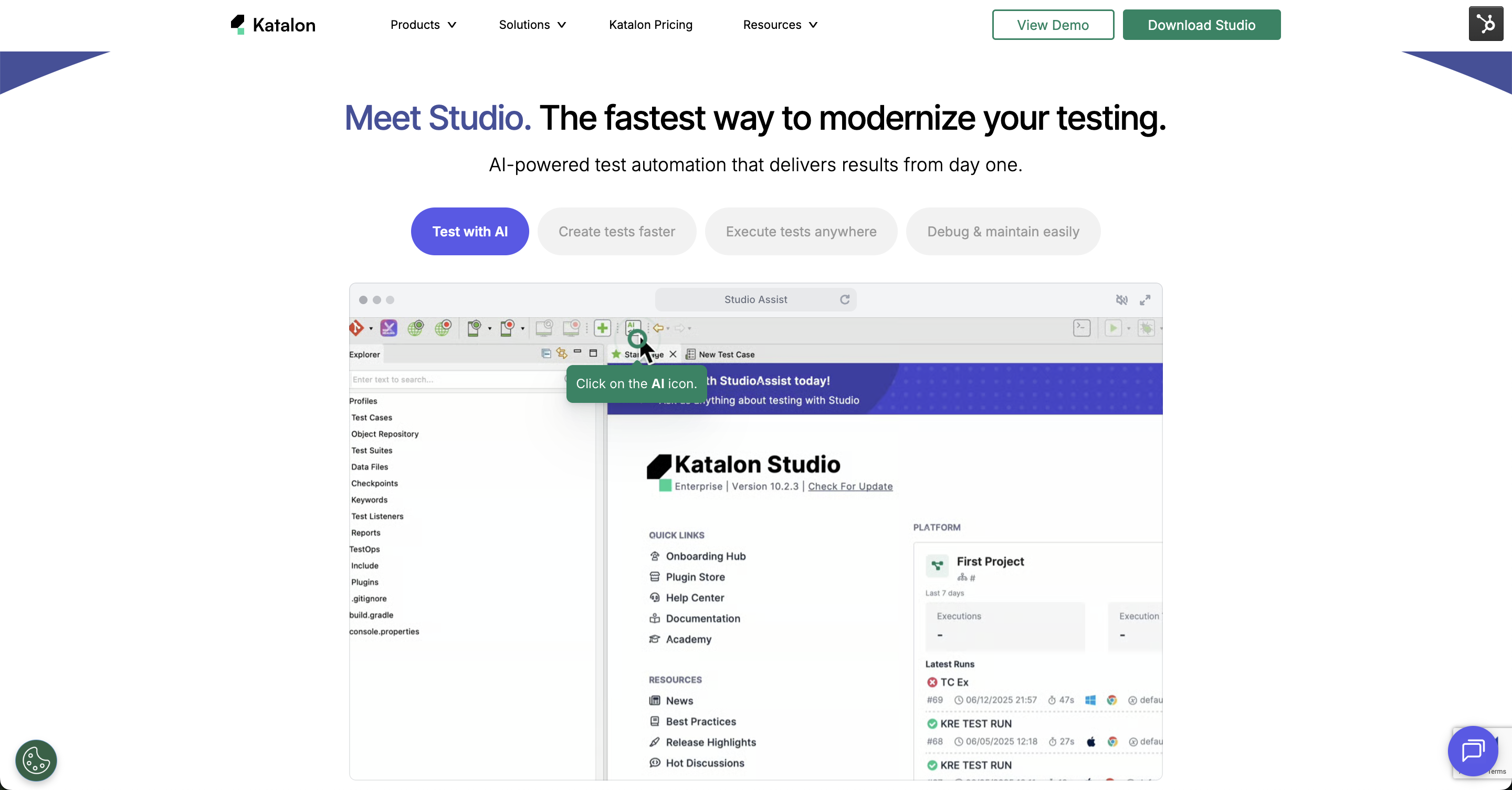
Key features:
- Web, mobile (Android and iOS), and API testing on every plan; Windows desktop testing on Professional and Enterprise
- Record and playback, keywords, and a Groovy or Java script view for the same test case
- An Object Repository with several locators per object, plus AI self-healing that retries alternative locators when the UI changes, on a paid plan (Professional or Enterprise)
- Katalon AI Assistant, which generates scripts from natural language, explains scripts, and helps fix failures on a paid plan (Professional or Enterprise)
- Data-driven testing with basic sources on every plan, plus database sources and data binding, Cucumber and Gherkin BDD, and parallel execution on Professional and Enterprise
- Integrations with Jira and Azure DevOps on paid plans, Git providers on every plan, and CI tools such as Jenkins, GitHub Actions, Azure DevOps, and GitLab through Katalon Runtime Engine (KRE)
- An MCP server that connects Studio to your own AI tools, on paid plans
Pros:
- One project can mix web, mobile, API, and desktop tests in the same execution flow
- Testers who don't code can record and use keywords, while engineers edit the script view
- Authoring runs on Windows, macOS, and Linux, so only desktop tests need Windows, and iOS tests need a Mac
Cons:
- Windows desktop testing, parallel runs, and BDD need a paid plan, and CI execution needs the KRE add-on, which the Free plan does not include
- Scripts are Groovy or Java, so C# test code from Ranorex has to be rewritten
- Desktop testing covers Windows apps only, as with Ranorex
Pricing: Katalon Studio has a Free plan for local authoring and execution of web, mobile, and API tests. As of November 2026, Professional costs $1,800 per seat per year, billed annually (about $150 per seat per month), and Enterprise pricing is custom. You can start with a 30-day free trial. KRE and TestCloud are add-ons.
Katalon Studio vs Ranorex Studio
If you're weighing Katalon Studio against Ranorex Studio specifically, the main differences are:
- Where you author. Ranorex Studio runs on Windows. Katalon Studio runs on Windows, macOS, and Linux; desktop tests still need Windows, and iOS tests need macOS.
- Languages. Ranorex coded tests use C# or VB.NET. Katalon Studio uses Groovy and Java.
- Application types. Both cover Windows desktop, web, and mobile, and both list API testing. Katalon Studio builds REST, SOAP, and GraphQL tests in the same project and object model as UI tests.
- Pricing model. Ranorex sells floating licenses by quote, with no free plan. Katalon Studio publishes its prices on the pricing page and has a Free plan, though desktop testing needs Professional or Enterprise.
- Execution. Ranorex Studio Runtime licenses run tests on Windows machines. Katalon Runtime Engine runs Studio tests from the command line, in Docker, and in CI on Windows, macOS, or Linux.
Ranorex has the longer list of supported desktop technologies, such as Delphi, Qt, and Java Swing. If your app uses one of those, test it in both tools before you decide.
2. TestComplete
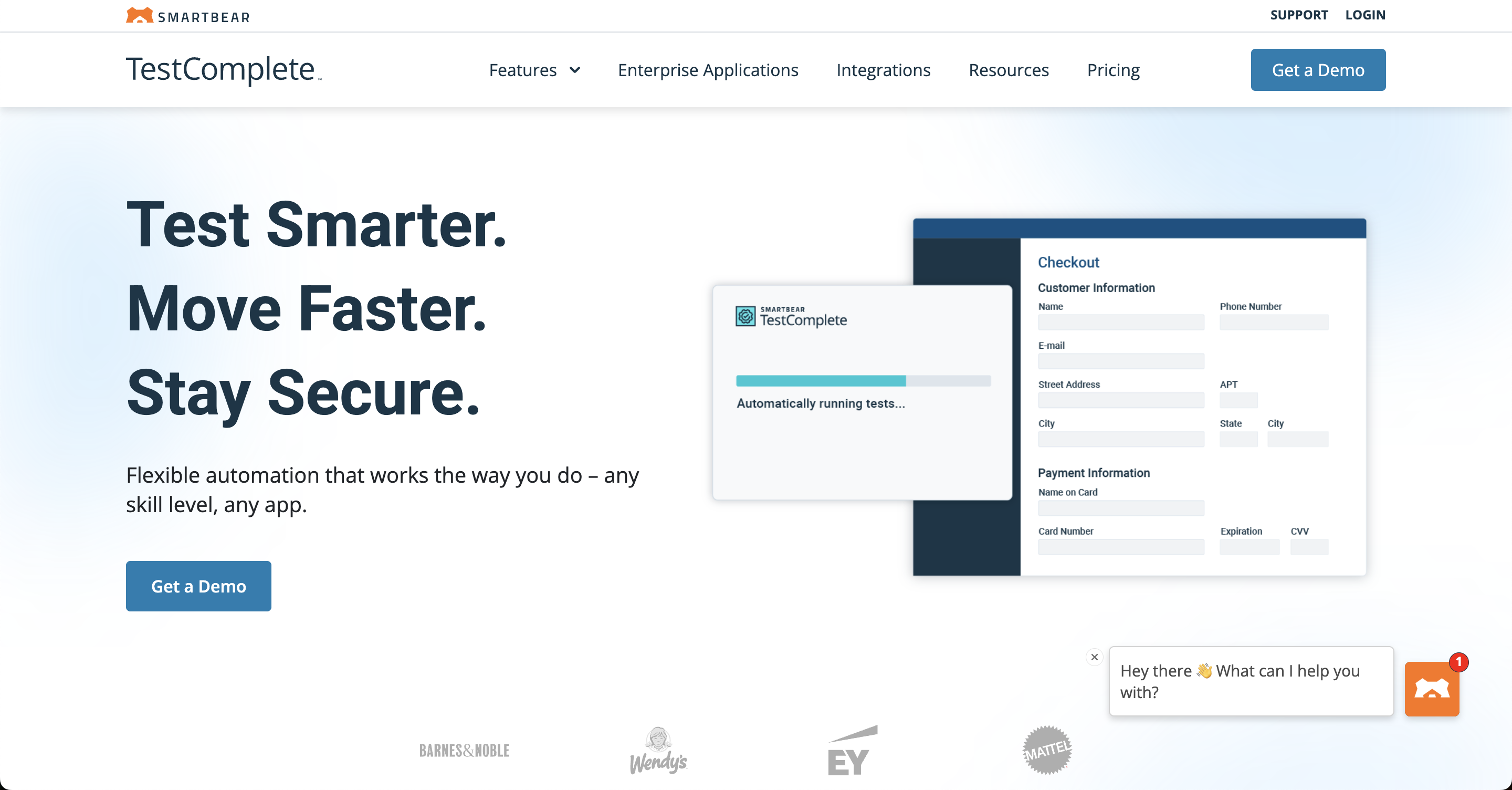
TestComplete, from SmartBear, is a commercial UI automation tool for Windows desktop, web, and mobile apps. Like Ranorex, it is Windows-focused and covers desktop, web, and mobile, and it handles legacy desktop technologies such as WinForms, WPF, and Delphi.
Key features:
- Object recognition for standard and custom desktop controls, with access to internal objects, methods, and properties
- Record and replay, keyword-driven tests, and scripting in JavaScript, Python, VBScript, DelphiScript, and other languages
- AI self-healing, OCR, and visual testing, according to SmartBear
- Data-driven testing, parallel execution, and integrations with CI, source control, and test management tools
When it's a better fit than Ranorex:
- Your main targets are rich Windows desktop apps and you want deep access to internal object properties
- Your team wants to script in JavaScript or Python rather than C#
Things to weigh: TestComplete runs on Windows, like Ranorex, so it doesn't help teams that need macOS or Linux authoring. Pricing: commercial; check SmartBear's TestComplete pricing page for current editions.
For a closer look, see our TestComplete alternatives list and the Katalon vs TestComplete comparison.
3. Playwright
Playwright is an open-source web testing framework from Microsoft. It controls Chromium, Firefox, and WebKit through one API and runs on Windows, macOS, and Linux. As of November 2026, the latest version is 1.65.0.
Key features:
- Auto-waiting for elements, which cuts down on timing-related flaky tests
- Browser contexts, multiple tabs, and network interception built in
- Browsers installed by Playwright itself, with no separate drivers
- Tests in JavaScript, TypeScript, Python, Java, or C#
When it's a better fit than Ranorex: you test modern web apps, want fast headless runs in Linux CI containers, and your team is comfortable writing code. Playwright doesn't automate Windows desktop apps or native mobile apps, so it replaces Ranorex only for web testing.
Pricing: open source and free.
4. Selenium
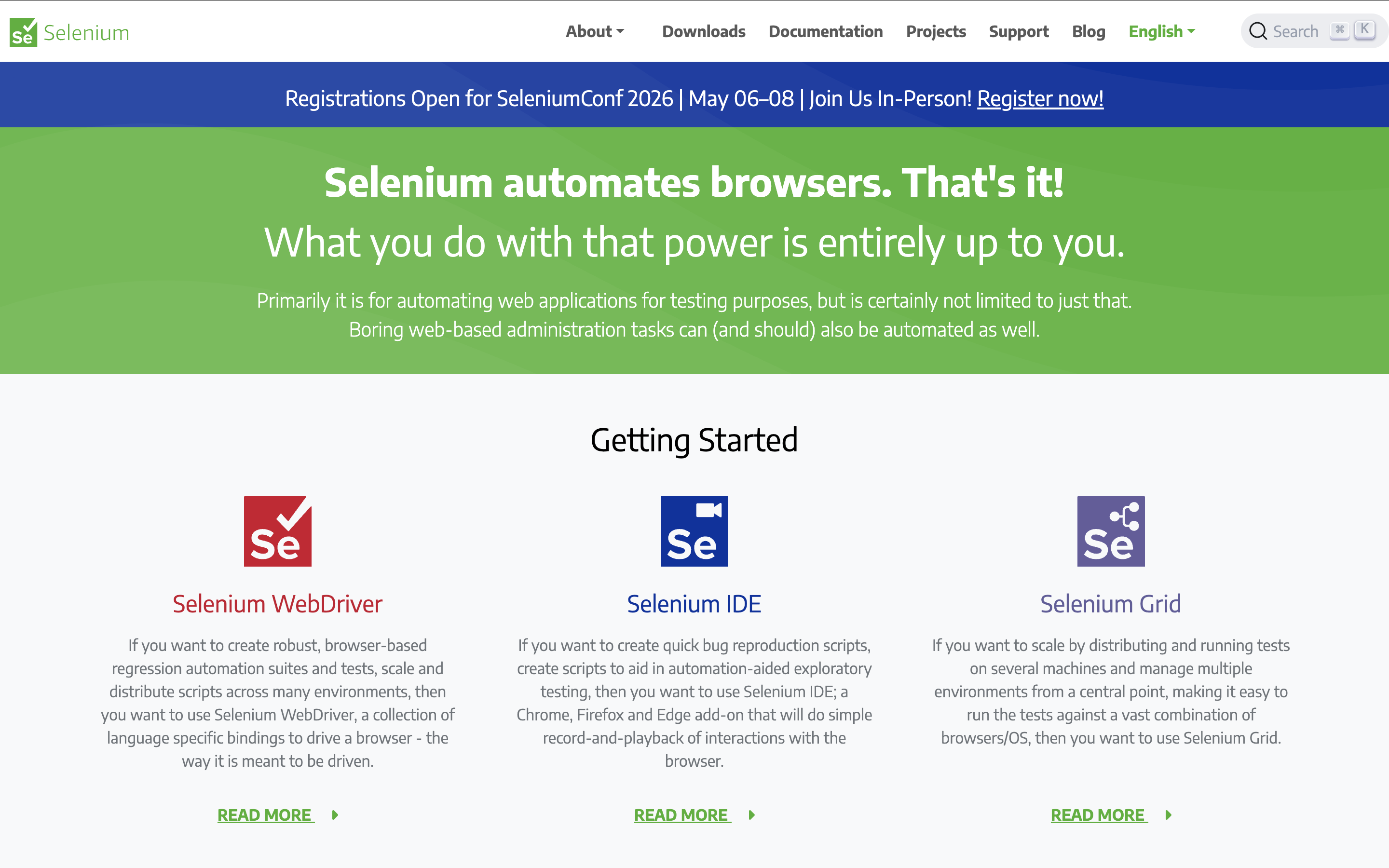
Selenium is the long-standing open-source browser automation project. It includes WebDriver, Selenium IDE for record and playback, and Selenium Grid for remote and parallel runs. As of November 2026, the latest version is 4.52.0.
Key features:
- Official bindings for Java, Python, C#, Ruby, and JavaScript
- Chrome, Edge, Firefox, and Safari support on Windows, macOS, and Linux
- Selenium Manager, built in since version 4.6, which downloads the right browser driver automatically
- Selenium Grid for distributed execution, with official Docker images
When it's a better fit than Ranorex: your team already has Selenium skills or infrastructure, wants a language choice, or needs a free tool for web testing. Since Ranorex can also run web tests on Selenium Grid, some teams use both.
Limitations: Selenium is a library, not a full test tool, so you build waits, reporting, test data handling, and CI scripts yourself. It doesn't cover desktop apps, and mobile testing needs Appium.
Pricing: open source and free.
5. TestCafe
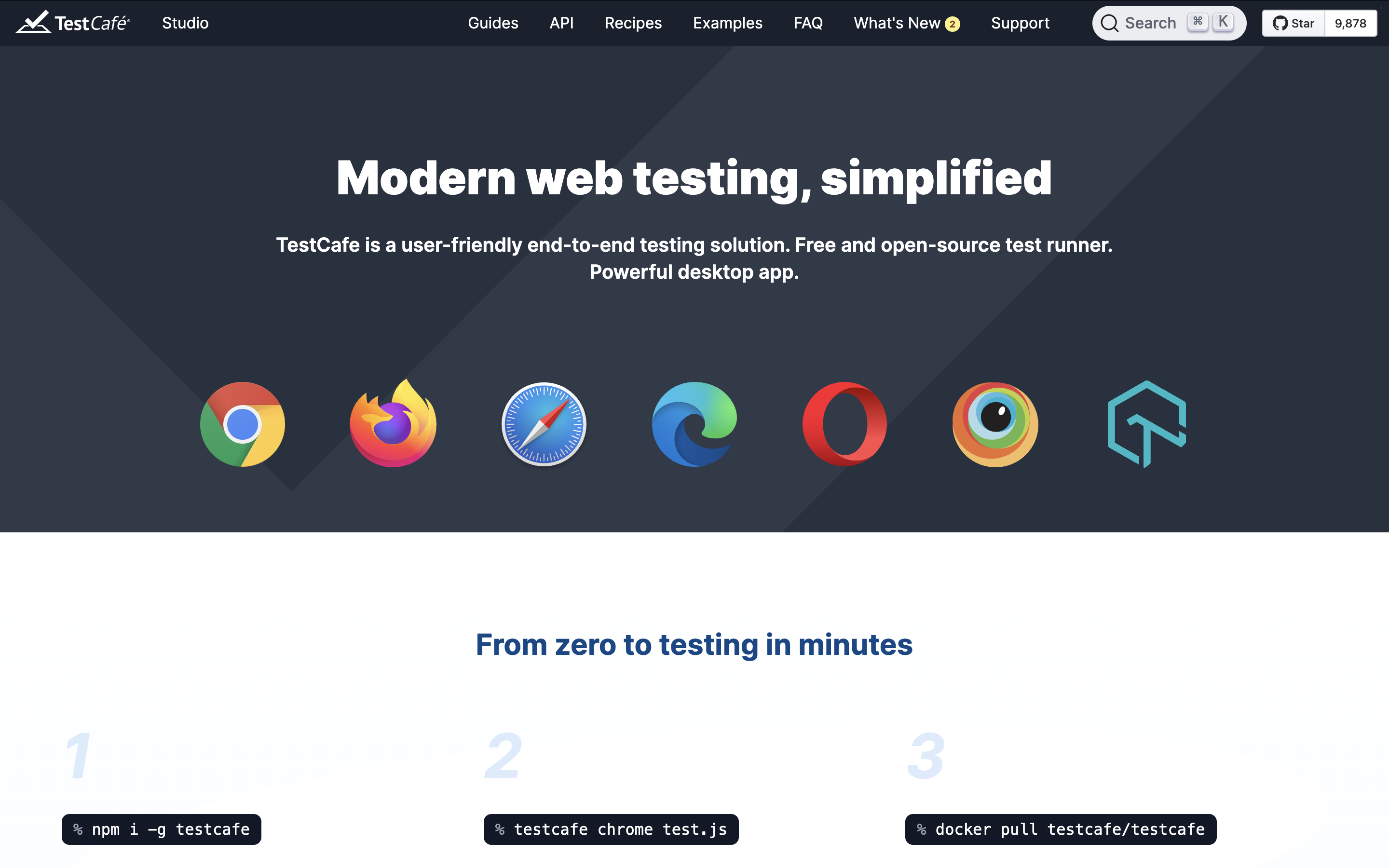
TestCafe is an open-source Node.js framework for end-to-end web testing. It runs tests without WebDriver or browser plugins. As of November 2026, the latest version is 3.7.7.
Key features:
- Tests in JavaScript or TypeScript
- Cross-browser and headless runs
- Built-in waits and selectors
- Parallel and remote execution, plus CI and reporter integrations
Pros:
- Quick to add to an existing Node.js project
- No driver setup
Cons:
- Requires scripting, so it's less suited to testers who don't code
- Web only: no desktop or native mobile apps
- Visual testing needs external tools
Pricing: open source and free.
6. WebdriverIO
WebdriverIO is an open-source JavaScript and TypeScript framework built on the WebDriver and WebDriver BiDi standards. It covers web testing and, through Appium, mobile testing. As of November 2026, the latest version is 10.2.0.
Key features:
- Cross-browser runs on Chrome, Firefox, Safari, and Edge
- Mobile automation through Appium
- A plugin system for reporters, services, and assertions
- Parallel execution, retries, and integrations with cloud grids and CI tools
Pros:
- One JavaScript codebase can cover web and mobile
- Official services for Selenium Grid, Appium, and cloud device providers
- First-class TypeScript support
Cons:
- Many configuration options, which can slow down new users
- Requires coding skills
- Desktop testing depends on Appium drivers rather than built-in support
Pricing: open source and free. Cloud grids or device farms cost extra.
7. Appium
Appium is the open-source framework for automating native, hybrid, and mobile web apps on iOS and Android. As of November 2026, the latest version is 3.9.0. Desktop platforms such as Windows and macOS need separate drivers.
Key features:
- One WebDriver-based API for iOS and Android
- Client libraries for Java, Python, JavaScript, C#, and Ruby
- Real devices, simulators, emulators, and cloud device farms
- A driver and plugin system for extra platforms and features such as image comparison
Pros:
- The base that many mobile test tools build on, including Katalon Studio and WebdriverIO
- Free choice of language
- Large community and documentation
Cons:
- Setup takes effort, especially for iOS, which needs a Mac with Xcode
- You maintain device and emulator environments, or pay for a device cloud
- Windows desktop support depends on the WinAppDriver-based driver or community drivers
Pricing: open source and free. Device farms cost extra. For more options, see our Appium alternatives guide.
8. Robot Framework
Robot Framework is an open-source, keyword-driven framework for acceptance testing and RPA. Its readable syntax lets testers who don't code write tests, and libraries extend it to web, mobile, API, database, and desktop testing. As of November 2026, the latest version is 7.5.1.
Key features:
- Keyword-driven, behavior-style tests
- Libraries such as SeleniumLibrary, Browser (Playwright-based), AppiumLibrary, and DatabaseLibrary
- Built-in reports and logs
- Runs on Windows, macOS, and Linux, with CI support
Pros:
- Low entry barrier thanks to readable keywords
- Reusable keywords help keep large suites maintainable
Cons:
- Complex scenarios often need custom Python libraries
- Debugging long keyword chains can take time
- Desktop testing depends on third-party libraries, so coverage varies by technology
Pricing: open source and free.
9. FlaUI and WinAppDriver
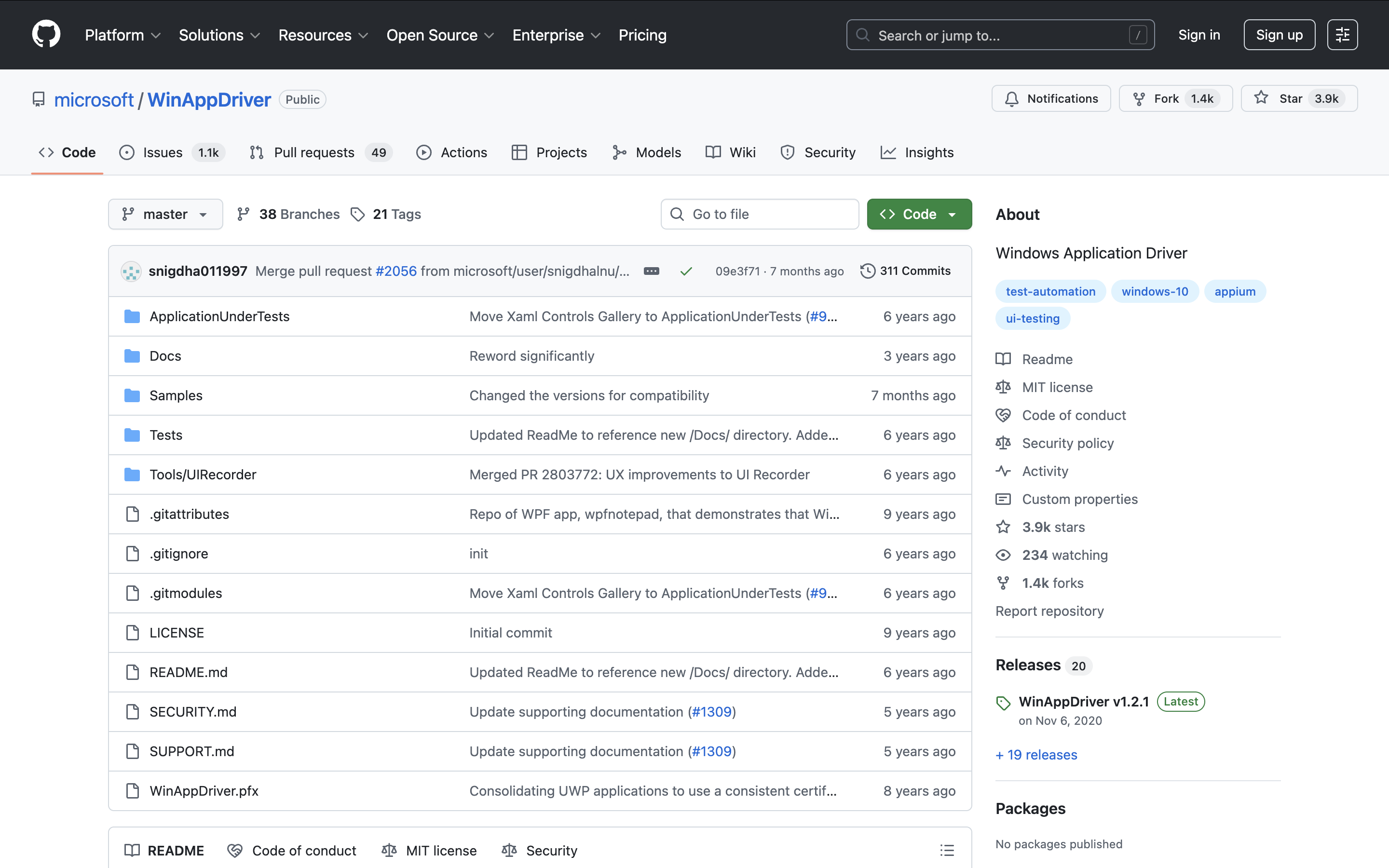
If you want to keep Windows desktop testing but write the framework yourself, FlaUI and WinAppDriver are the free options.
- FlaUI is an open-source .NET library (MIT license) that wraps Microsoft's UI Automation APIs for Win32, WinForms, WPF, and UWP apps. It is still maintained as of November 2026, and it is the basis of Katalon Studio's built-in desktop driver.
- WinAppDriver is Microsoft's free WebDriver-style driver for Windows apps. You can use it from Selenium or Appium client libraries in several languages. Its last stable release is v1.2.1 from November 2020, so check its status before you build on it.
Pros:
- No license cost
- FlaUI fits naturally into C# and .NET test projects, which helps teams coming from Ranorex coded tests
Cons:
- No recorder, object repository, or reporting out of the box
- Windows only
- WinAppDriver has had no stable release since 2020
Pricing: free.
10. Leapwork
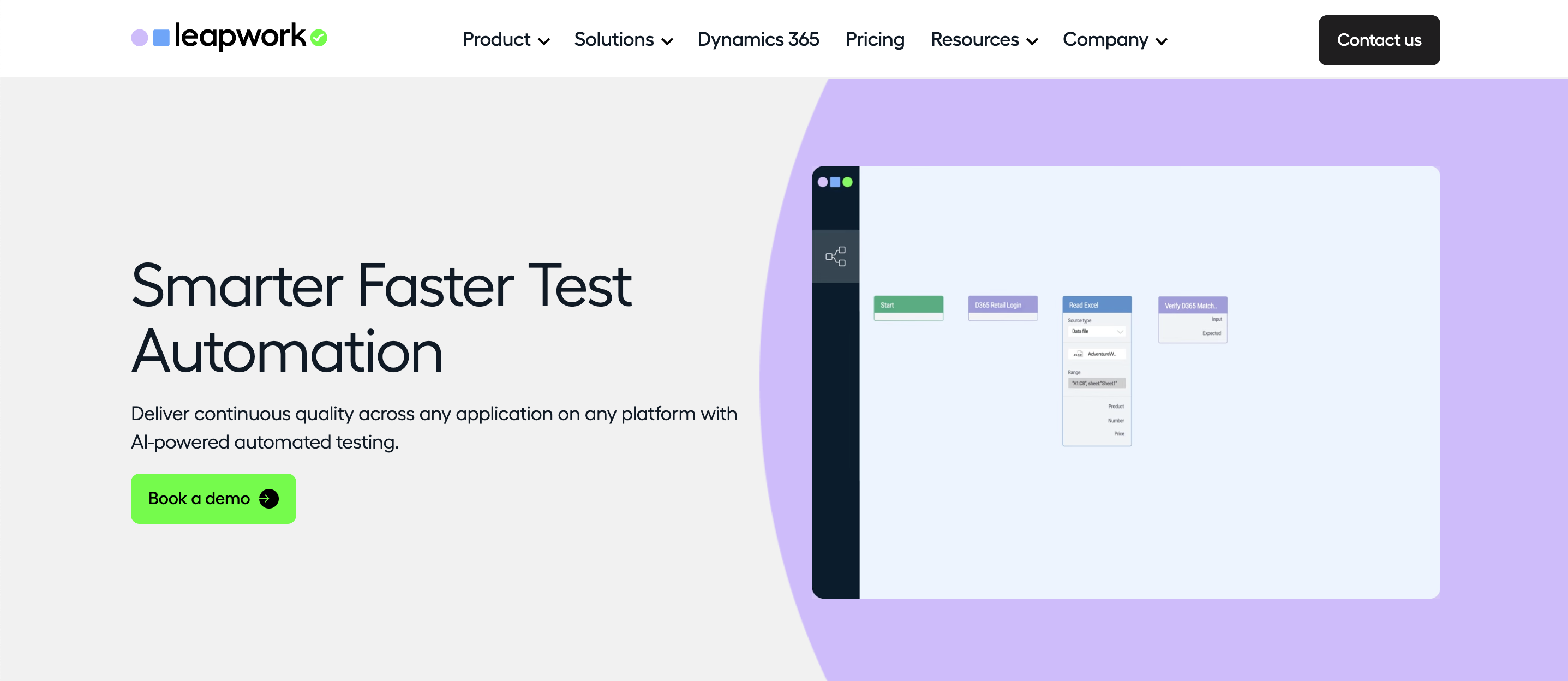
Leapwork is a commercial test automation platform for web, mobile, desktop, API, and enterprise apps such as SAP, Dynamics 365, Salesforce, and Oracle. As of November 2026, Leapwork describes itself as a continuous validation platform with AI agents and visual workflows. Its products include Leapwork Play (Playwright-based test automation), Leapwork Flow (end-to-end business process validation across applications), and Leapwork Go (performance and load testing).
Key features:
- Visual, flowchart-style test design
- Web, mobile, desktop, API, and enterprise application coverage in one flow
- Scheduling, parallel runs, and video and data logs for debugging
- Integrations with CI and dev tools such as Azure DevOps, Jenkins, GitHub, and Jira
Pros:
- Low barrier for business users and testers who don't code
- Cross-application tests, for example web to desktop to API in one flow
Cons:
- Commercial license with quote-based pricing, so budget for it in a way you don't for open-source tools
- Less flexible than code-based tools for unusual workflows
- Large flows can get hard to manage
Pricing: commercial. See Leapwork's pricing page or talk to its sales team.
Mobile-first alternatives to Ranorex
If mobile is your main reason for leaving Ranorex, look at tools built on Appium:
- Appium for full control and free choice of language.
- WebdriverIO if your team writes JavaScript or TypeScript and tests web and mobile from one codebase.
- Katalon Studio if you want a recorder, an Object Repository, and keywords on top of Appium, and need web and API tests in the same project. Mobile testing is on every plan, including Free.
You'll still need real devices or a device cloud for coverage across models and OS versions.
Ranorex alternatives for macOS and Linux
Ranorex Studio runs only on Windows. If your team works on macOS or Linux, or runs tests in Linux containers:
- Playwright, Selenium, TestCafe, WebdriverIO, Appium, and Robot Framework all run on Windows, macOS, and Linux. Native iOS testing with Appium still needs a Mac.
- Katalon Studio runs on Windows, macOS, and Linux for web, API, and Android testing, and the Katalon Runtime Engine (KRE) add-on runs those tests in CI and Docker on a paid plan. iOS tests need a Mac, and Windows desktop tests need a Windows machine.
Windows desktop tests run on Windows with every tool in this list, so if you test Windows apps, plan for at least one Windows runner.
When to stay with Ranorex
Ranorex Studio is still a sound choice in some cases:
- Your app uses desktop technologies other tools handle less well, such as Delphi, Qt, Java Swing, or Mescius Spread components. Ranorex lists these explicitly.
- Your team is .NET-first and writes coded tests in C#, or uses the Visual Studio plug-in.
- You already have a large Ranorex suite that runs reliably. Rewriting it costs time that may outweigh the license savings.
- You use other Sembi tools such as TestRail or DesignWise and want to stay with one vendor.
Which Ranorex alternative should you choose?
- Choose Katalon Studio if you need Windows desktop, web, mobile, and API testing in one tool, want testers who don't code and engineers in the same project, and prefer published pricing with a Free plan to start.
- Choose TestComplete if your focus is rich Windows desktop apps and you want to script in JavaScript or Python.
- Choose Playwright or Selenium if you only test web apps, want zero license cost, and have engineers to maintain the framework.
- Choose Appium or WebdriverIO for code-first mobile testing.
- Choose Robot Framework for keyword-driven tests on an open-source base.
- Choose FlaUI for free, code-only Windows desktop automation in .NET.
- Choose Leapwork for visual, low-code automation across enterprise apps such as SAP and Dynamics 365.
Whichever you shortlist, run a short proof of concept on your hardest screens, since desktop object recognition varies most between tools. To try Katalon Studio on your own app, start the 30-day free trial and check plan details on the pricing page.
Frequently asked questions
It depends on what you test. For Windows desktop, web, and mobile in one tool, Katalon Studio and TestComplete are the closest matches to Ranorex Studio. For web testing only, Playwright and Selenium are free. For mobile, Appium is the open-source standard. Test your hardest screens in a short proof of concept first.
Yes. Playwright, Selenium, TestCafe, WebdriverIO, Appium, and Robot Framework are open source and free, and FlaUI is a free .NET library for Windows desktop apps. Katalon Studio has a Free plan for web, mobile, and API testing, but its Windows desktop testing needs a paid plan (Professional or Enterprise).
Playwright, Selenium, TestCafe, WebdriverIO, Appium, and Robot Framework all run on Windows, macOS, and Linux. Katalon Studio also runs on all three for web, API, and Android testing. iOS tests need a Mac, Ranorex Studio runs only on Windows, and Windows desktop tests need a Windows machine with any tool.
Appium is the open-source standard for native iOS and Android apps and supports Java, Python, JavaScript, C#, and Ruby. WebdriverIO adds mobile testing to a JavaScript web stack. Katalon Studio builds on Appium with a recorder, object management, and keywords, and mobile testing is included in its Free plan.
As of November 2026, Ranorex Studio is part of Sembi, a software quality company formed by Idera that also includes TestRail, Xray, and Testmo. The website brands it "Ranorex by Sembi" and its copyright line names Ranorex GmbH. The latest release, Ranorex Studio 13.0.0, adds a .NET 10 edition (beta) alongside the .NET Framework 4.8 edition.
Yes. Katalon Studio tests UWP, WinForms, WPF, and classic Win32 apps with a built-in FlaUI-based driver, so you don't install WinAppDriver separately. You can spy, record, and run desktop tests. Desktop testing is on the Professional and Enterprise plans, and desktop tests run on Windows, as with Ranorex.




Test everything. Ship with confidence.
From generating test cases to spotting failures, Katalon's AI works across your entire pipeline, automatically.
